Thursday, September 13, 2018

Casting Out the Devil: Living with the Stigma of Epilepsy


Recently I lost my job. I'd been working at House of Fraser's Wellingborough warehouse for four years. Last year we began hearing whispers about its financial problems. Then DHL lost the contract to deliver the service for House of Fraser; it was won by XPO, who, we all presumed, had promised to deliver the same service for less money. But whatever was happening in the offices over our heads didn't work. House of Fraser went into administration and was bought by Mike Ashley, owner of Sports Direct, where the abuse of workers was so infamous Ashley was called to explain himself in Parliament. (As far as I'm aware, not much changed.) Ashley, as the new boss at House of Fraser, immediately fell into a dispute with XPO, who wanted some assurance that he would make good on the millions of pounds they'd invested in automation to make the service more 'efficient'. He said he would pay them nothing; he was under no legal obligation to pay, so he wouldn't. It was war. And we, the ordinary workers, were the victims. Everybody at the warehouse employed by an agency -- the number ran into the hundreds -- was told with only a couple of days' notice not to come into work anymore. My agency promised to find us all other jobs. I expressed an interest in a certain warehouse on the outside of Northampton, my choice dictated by amenable hours and the accessibility of the place by bus. I'd had enough of the four-hour commute I'd put myself through every night for the last four years just to get to Wellingborough, only ten miles from my house. And everything seemed to be set; at a jobs fair I'd attended they said the company were desperate for new staff. I even spoke to the agency man who supervised that particular contract, asking him if he knew when I might be starting. 'I'm talking to the manager this afternoon,' he told me. 'He'll tell me what sort of volumes he needs and when, and I'll get back to you.' (People are 'volumes' now in the workplace.) That call happened six weeks ago and I've had no reply. Why? I can only guess. When the agency staff were laid off at House of Fraser, the supervisor there said our personal files would be passed directly on to the supervisor in our new workplace. And on my file there is one word that, in the years since my diagnosis, has changed everything: EPILEPSY. The same agency knew about my epilepsy at House of Fraser; but I'd already been in the job for two years when I was asked to make a health declaration by either the agency or DHL, so I lied and said I'd just been diagnosed. I knew what would happen if I didn't. I'd been treated like a pariah by employers since I started having seizures. It makes you guarded about what you say and to whom, and it cautions you always to expect the worst. The worst, after all, usually happens. But since, as far as they knew, my epilepsy was a recent discovery, they couldn't fire me because of it. That, of course, would be discrimination. Hiring someone who you know to be epileptic, of course, is quite a different matter. And you can have all the anti-discrimination laws you like, but if an employer doesn't want you because you're black, or a woman, or you have a learning difficulty, or you're in a wheelchair, or you have a long-term medical condition like I have, all they have to do is say, 'We went with someone with more experience,' and nobody can contradict them. Unless you can afford to go to court.
When I tell prospective employers I have epilepsy it's like the kiss of death. You can see the horror in their faces as they try to calculate how to respond to my disclosure without landing their company in a lot of legal trouble. One care work company actually had their lawyers on me, and insisted I give the company directors access to my medical records.And I have informed another agency in the last six weeks about my condition and despite my experience, my qualifications and my immaculate (ironic, isn't it?) sickness record, they can find nothing for me either.
Is this a coincidence? Have I become, in the last few years, mysteriously unemployable? Perhaps, but I don't think so. All of which leads me to an obvious solution. If I want work, I will just have to lie about my health as I did before to get work. But then, every company I've worked for in the last decade does random drug testing. If something you're taking is detected in your urine sample, and you haven't declared it, you will be instantly dismissed. As an epileptic I have to avoid stress. I can't be fearing, every day when I go to work, that I won't have a job before my shift is finished. I've got my seizures under control now, more or less; that kind of anxiety would put me on the floor again in hours. I can only hope that something good comes along, and while I'm waiting for that to happen, do a little retraining. Warehousing was all I could do when my epilepsy barred me from continuing in care work. Maybe if I learned how to do something else, I'll find less fear, more open-mindedness about what is, after all, a condition which many of us can have and lead perfectly normal, safe and productive lives. After being seizure-free for a certain amount of time a person is allowed to drive again; if you are considered safe behind the wheel of a car on a busy road, where could you, with any justice, be considered a danger?

Thursday, August 16, 2018

Shipwrecked in Trumpland

There's a poetry page I've recently discovered that's doing something I think is really important. It's called Winedrunk Sidewalk: Shipwrecked in Trumpland and as the name suggests, it publishes a lot of poems about Donald Trump. I don't know if it has ever published any poetry in praise of Trump; I'd be surprised if anyone had written any, at least any that were publishable. But the anti-Trump poetry is fierce. So are some of the other pieces, all of which the editor, John Grochalski, selects to build a picture of life in Trump's America. Don't like messages in your poetry? Think writers should stay out of politics? The quality of the work in Winedrunk Sidewalk makes those objections redundant anyway, but as I'm sure John would agree, there are times when intellectual detachment just isn't good enough. The leader of the most powerful nation in the world is a racist, a homophobe, a self-confessed sexual predator and an enemy of the free press. Only weeks ago a socialist bookstore in London was raided by fascists. Can we continue to turn our backs and pretend everything's dandy when the world we grew up in, as fucked up as it was, is collapsing around our ears?

Saturday, March 31, 2018

What's Going On: Keeping It New in my Fifties

Leah Song of Rising Appalachia

Poetry is my vocation but music is my love. Music even gave me poetry, in a sense. I'd read one poem I loved before, but only one: Dryden's 'MacFlecknoe', which succeeded where others failed because it had fart jokes and a reference to people chucking their poo into the Thames in the morning. But listening to the words of Bob Dylan, I woke up to poetry's incredible possibilities. I also first encountered Allen Ginsberg in Dylan's movie 'Renaldo and Clara'.

I don't listen to Dylan anymore. There seems no need, I exhausted my appetite for his take on the world a long time ago. Other musical heroes have faded (Neil Young, for example) while on certain days I still listen to some. When Willie Nelson has a new one out, I always try to hear it. Partly that's because of Willie's amused detachment from the business he's in. He doesn't need fame for personal completion.The other reason is that he doesn't do the same thing repeatedly. In the last few years we've seen a reggae album and duets with Snoop Dogg interspersed with peace songs and dark meditations on death.

My creativity and my sense of personal well-being rely on my involvement with other artists; not as much as they depend on my relationships, but art is significant. Music, however, has changed. Just not in the way we think. Some younger people I've spoken to say it isn't as good as it used to be. And people in their forties and older, many of us, are convinced it's not. 'In our day you could see the Sex Pistols and the Jam on the same edition of "Top of the Pops",' they say. 'Now everything is Ed Sheeran and Adele.' I've even expressed that view myself on occasion and retreated into old musical habits to hide my mind from the over-produced commercialised garbage played ad nauseum on the radio. Crosby, Stills and Nash are vastly more appealing to my ears than anything I've heard on Heart Extra.

The thing is, you won't hear anything on the radio that will shake you up or thrill you or liberate you, not anymore. (There wasn't that much of it in the old days either.) It's true what the jaded nostalgia buffs and old cynics say about the music business being swallowed by the capitalist ethos of (in Jim Morrison's words) 'money beats soul every time'. If the record companies can't make money from an artist they won't sign him or her; and if artists doesn't bring a radio station listeners, it won't play them.

What those of us of an advanced vintage often forget is that we no longer need radio stations, or even music shops, to act as our intermediaries when it comes to music. The internet has been unwelcome, in a way, for artists with multi-million dollar recording contracts. Columbia police YouTube like Chinese secret police in Lhasa and insist every upload of a Bob Dylan song (Dylan, the scion of Woody Guthrie) be deleted for copyright reasons. Artists without contracts, or artists recording on tiny labels, however, can put their music online and be heard, potentially, almost anywhere in the world. And as listeners we can hear almost any musician in the world, if they have access to a camera.

So lately I've been doing just that, going online to see what, and who, I could find. There are probably a hundred different platforms I don't know about, but YouTube is the one I've been using for my investigations. The results have been extraordinary. It turns out there is a whole generation of young artists who I'd never even heard of making fresh, honest, soulful, brilliant new music. You will never see most of it on tv, and if some of these men and women get within five miles of a giant concert venue it will be when they are busking for pennies from Sheeran fans. But that isn't important. It's the music that's important. Which sounds dreadfully purist and not at all the sort of sentiment you're supposed to indulge in now, but I think people should be purists about their art. Power subjugates and controls first by making us cynical.

Here's one band I found during my searches for new music online. Even their name would prevent them from being played on the radio, unless 'on the rag' means something different on the other side of the water. Seeing how they rattle out 'Something Smells Like Fish', though, I have a feeling that exclusion from mainstream radio wouldn't bother them a bit. They look like they're having a party out on the street.


The most polished and realised of the bands is Rising Appalachia, at least from the searches I've made. They have had some success already, and they come with a complete environmental and spiritual vision for the world. I thought they were my discovery until Martyna, a hippie friend, told me she listened to them every morning. Then I found out one of my other Facebook friends was an admirer too. They do have music out. I've looked for them on Amazon to see if they had a cd I could buy. Unfortunately, they're all in the £15-25 range, which is a little out of my league. 

I could go on for much longer about the fantastic music that's being made right now, and how inspiring it has been for me creatively to find it. But I don't want to tax the reader's patience. I'll end with one more video, this one featuring the most raggle-taggle gang you'll ever see knocking out a great performance on the street. They're the Rail Yard Ghosts and they kick serious musical arse.


Sunday, March 18, 2018

Discovering India


This is Gaurav Maurander. I bought a cd of his for 50 pence in a Northampton charity shop yesterday. 'Neemrana: A Musical Journey in India.' I didn't know anything about him, but I liked the image on the front of the disc. It had several people seated on a stage playing traditional Indian instruments: the sitar, the tabla, the sarod, the tampura. There was no evidence anywhere of anything remotely modern or intrinsically Western. It was unlikely, therefore, to be one of those ghastly cds you buy in alternative shops which drown traditional Asian music in soporific synthesisers and rain sounds as a relaxation aid. It was also, as I've already mentioned, only 50 pence, so if I'd guessed incorrectly I wouldn't be too much out of pocket.


The album, I'm happy to report, is a joy, although the liner notes reveal that there's a strong Western connection. The collection of musical pieces that comprised the tour from which 'Neemrana' derives were all composed by Gaurav, but he was asked to write them by two French musicians, and most of the musicians on the tour were French. The last track 'Pahadi-Dhun' was recorded in France too, although the rest are from performances in India. 


Musical criticism isn't my forte, as readers of Suffolk Punch will know. Largely this is because I haven't got a clue about the technicalities of musical composition; if I knew the vocabulary of music, in other words, I might be able to talk about it better. And I understand that traditional Indian music is extremely complicated. Watch, as I have, Ringo Starr and George Harrison discussing how maddeningly elusive mastery of Indian rhythms is in the Scorcese documentary 'Living in the Material World'.


All I can say about 'Neemrana', then, is that it sounds like the India of my mind (I've never been): I don't know how, but the music evokes great heat, flat landscapes and slowly winding rivers, the air pregnant with ancient deities; it also captures the busy-ness of teeming cities. Which is precisely what I want from Indian music. The dance beats that I hear on the BBC Asian Network give me nothing I can't get on mainstream English radio; and I've rarely danced in the fifty three years I've been on the planet.

With time to spare, and curious enough to know more about Gaurav, I entered his name into the search bar on YouTube; unsurprisingly, perhaps, he's there. Each video of his also suggested numerous other traditional Indian musicians I was equally unaware of. This made me realise something interesting. I'm a relatively intelligent, open-minded and culturally aware man. But there are whole areas of the arts I know nothing about, and the determining factor in my ignorance, other than laziness (which would prevent me from digging for information hidden by the cultural selections made by an ethnocentric media), is obviously race. The only sitar players I could have named before yesterday were Ravi and Anoushka Shankar. Perhaps I need to stop expecting that my artistic inspirations should like quite so much like me?

Here's Roopa Panesar, a musician who, my research this morning shows, is well known enough to have been featured on Radio Three - not that I had a clue. I'll be on YouTube again tomorrow looking for more.


George Orwell: When the Etonian Reared his Head

Reading Orwell's 'Down and Out in Paris and London' for the second time, I notice something I didn't see the first time around: his upper-crust Englishness. I'm no Orwell expert, but like everyone who grew up in the political Left, I have a certain sentimental view of him as a champion of the working class; as a libertarian; as an egalitarian; as someone who crusaded for the binning of the old world order.

'1984' and 'Animal Farm' certainly show us a man opposed to totalitarianism, and only a dogmatist would believe that was the province of politics in the East. But traditional English values seem to run through Orwell, at least pre-war Orwell, the way a seaside town's name runs through a stick of rock.

You can see the Old Etonian in his generalisations about race. He expresses a peculiar belief, for example, that Americans know nothing about 'good' food:

They would stuff themselves with disgusting American 'cereals', and eat marmalade at tea, and drink vermouth after dinner [...]. Perhaps it hardly matters whether such people are swindled or not.

Another pearl of wisdom is that women aren't given the job of chef in Parisian hotels because they are less able to co-ordinate the preparation and delivery of multiple simultaneous orders. The most surprising comment, however - at least for me - was this one about waiters:

[...] They work fifteen hours, seven days a week, in many cafes. They are snobs, and they find the servile nature of their work rather congenial.

Only an old Etonian, or the equivalent, could believe that. Hard work and long hours might be congenial to those who are amply rewarded, but no one who's getting paid a pittance wants to spend the best part of every day working his arse off for someone else, even if he or she does think it might be an investment in the future. 

None of the above observations diminish either my enjoyment of the book or my respect for Orwell (perhaps my respect for him is diminished a bit). He was a man of his time, and in any case, I feel I know him a little better by reading them. Many offspring of the upper classes have felt compelled, in the last 200 years, to take up the cudgels on behalf of the worker.

In the current climate of the Labour Party, however - the party which lionises Orwell traditionally - I think about the comments I've quoted, and other, frankly rather racist ones that I couldn't find as I leafed back through the book, and wonder what the reaction to them would be from Labour members if he were alive today, and he posted them on Twitter. The anti-Americanism might meet with tacit approval; even Americans have had the gravest doubts about their country since the election of Donald Trump. But I suspect there'd be considerable public condemnation and expressions of regret by party members about the rest of his remarks, even if they did fall short of calling him a Blairite, which is the usual, habitual response.


Saturday, March 10, 2018

The Lynching of Radclyffe Hall


Radclyffe Hall may be the least remembered of all the Western writers, poets and playwrights whose life and works were pilloried and forced to endure protracted legal battles in the last couple of centuries. Every person with an interest in the arts knows about Oscar Wilde, D.H. Lawrence, James Joyce, Henry Miller, Allen Ginsberg. But Radclyffe Hall? My own guilty confession is that I didn't even come across her name until Ginsberg mentioned her in a BBC interview in 1995 or '96. 

Why is she lower on the literary radar when her book 'The Well of Loneliness' caused a scandal and was prosecuted, and ultimately banned, under the Obscene Publications Act? One answer leaps to mind. Any man whose novel was condemned by the Home Secretary, now or historically, as 'gravely detrimental to the public interest', would be celebrated for all time. Radclyffe Hall was a woman, though, and a lesbian. Or, as she liked to call herself, an 'invert'. The book, which I haven't read, seems to have been a plea for these inverts, presenting them as suffering outcasts who deserve tolerance and understanding rather than the condemnation of the upright heterosexual world.

Can't argue with that, you might think, sitting here in the somewhat brighter light of 2018. But 90 years ago lesbianism, while not strictly against the law like male homosexuality, was seen as vile and corrupt, a degenerate practice that went against nature and would certainly lead astray any impressionable young woman who was exposed to it. So when Radclyffe Hall, already a successful novelist with a public profile, wrote a book on the subject, the moral guardians of the age went into overdrive, using tactics that wouldn't have been out of place in Soviet Russia to suppress it.

Hall had intellectual opinion on her side, but only in the sense that the academic and creative heavyweights of her day generally supported her right to publish. According to Diana Souhami's biography 'The Trials of Radclyffe Hall', Leonard Woolf didn't like the book, Cyril Connolly thought it 'brave' but humourless and boring, and Virginia Woolf thought the campaign to defend it a distraction, and wished it had never been written.

Woolf would defend 'The Well of Loneliness' in court, however, which H.G. Wells and Sir Arthur Conan Doyle both avoided even promising to do by announcing that they had left the country. John Galsworthy, who amusingly was the President of the PEN Club, said he was too busy to go to court and that anyway, literary freedom of expression was not at risk from the Government's attempt to ban Radclyffe Hall's book. The only notable author of the time who agreed to appear for the prosecution, supporting thereby the view that its content was obscene and all copies in existence should be burned, was Rudyard Kipling, creator of Mowgli and Baloo. Kipling also wrote 'The White Man's Burden', one of the most racist poems I've ever fouled ten minutes of my day with, so perhaps there should be no surprise.

At the trial, despite the presence of Woolf, E.M. Forster and 'almost every author of repute', in Sheila Kaye-Smith's words, the case was lost. Sir Chartres Biron, the judge, responding to a reasonable request by the defence to call expert testimony, made the outrageous declaration, 'I am here to decide whether this book is obscene or not.' And perhaps to no one's great surprise, after an appeal that was also lost, 'The Well of Loneliness' was 'consigned to the King's furnace.'

The extracts I've read from Hall's book have more in common stylistically with the writers of a previous age than the experiments and innovations of her contemporaries; by all accounts extremely conservative (quite an irony), only a few years later she developed a virulent anti-Semitism and a naïve infatuation with Mussolini. She was, however -- not that such things are excusable -- molested as a child, and forced to live in a world that regarded her natural sexual orientation as perverted and sinful. That would do great damage to most of us. Being different, or feeling different (sometimes not the same thing), in a society that favours conformity is a well of loneliness that drops very deep into the ground.

Do you remember a time when you sat down and decided whether you were going to fancy boys or girls? No, me neither. What worries me, when I read about Radclyffe Hall, or I consider what happened to Oscar Wilde, is that the tides of political reaction sweeping across the world may take us back to the days when people could be brutalised by the state, as they were, for loving in a fashion proscribed by the authors of a 2000 year old book. Which is the more offensive anyway, a novel that celebrates the diversity of love, or a spirit manual that calls it an abomination when the participants in the exchange can't populate an already over-populated world with more children?


Sunday, March 04, 2018

David Ogden Stiers


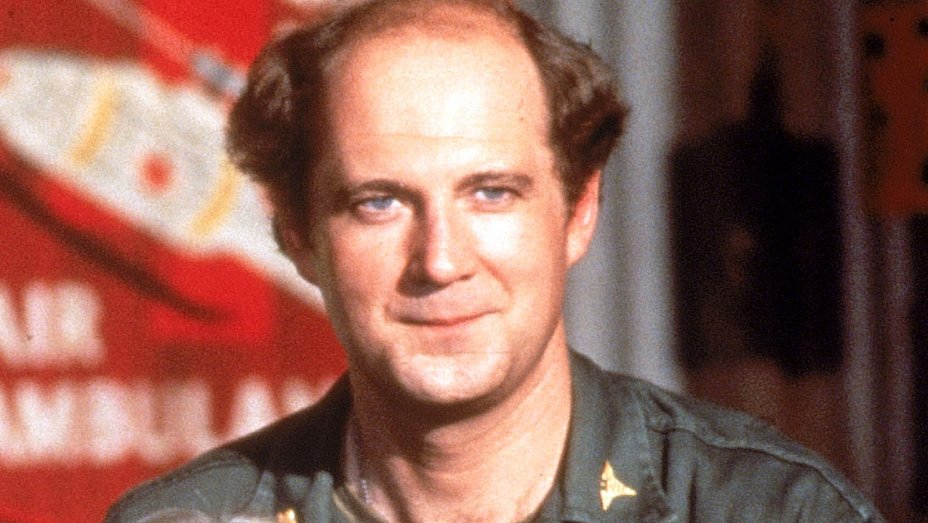
David Ogden Stiers, who played the fabulously snotty, secretly fragile Charles Emerson Winchester III in M*A*S*H, has died. God, I loved that show with its brilliant word play and unrestrained self-righteous liberalism. Winchester, of all the main protagonists, was perhaps the only unapologetic Republican in the 4077th (Margaret Houlihan started that way, but softened considerably as the show matured); and yet, because of the depth David Ogden Stiers brought to the characterisation, not to mention his fabulous comic tone and timing, he was always my favourite. I saw a little piece of myself in Winchester too, with his habit of taking refuge from the world in music and the sublimities of art. We did it for different reasons, but there were many times when I too would sit alone in the tent listening to Dylan or Ginsberg while people lived and laughed on the other side of the canvas.

Friday, March 02, 2018

Northamptonshire Cuts: Does Anybody Read These Days?


It was World Book Day on Thursday. People are sceptical about most World-- or International Anything Days, or Months, seeing them as tokenistic or politically motivated. But World Book Day has really caught on. Schools encourage children to dress like their favourite characters from books, which in some at least will foster a connection between reading and fun, perhaps even self-actualisation. The media discusses books on World Book Day as well. It's the one time of the year when reading in the traditional way isn't presented as archaic, the province of social rejects or old people with their lives long behind them.

In Northamptonshire, World Book Day happened to fall in the week when the county council, who have made themselves a national embarrassment by ruining the county financially, announced their new post-calamity budget. Which is worse than a calamity; it's closer to a kind of social Armageddon for the poor, the lonely and the vulnerable. To balance the books the council is axing subsidised bus services, which at a stroke isolates those who don't have cars and can't afford taxis. It's also promising to close 21 of Northamptonshire's smaller libraries.  

I was in a rage about this when I heard the news. People told me it was okay, though. Nobody used libraries anymore. Most didn't even read books anymore. The proof of it was that the smaller libraries were often empty when you went in. I don't know about that. We often generalise about things we've only experienced once or twice. Thinking libraries are always empty because you once saw an empty library is a logical fallacy, like believing nurses all stand around talking to each other when they should be caring for patients because you walked into the ward once at handover.

I have no idea whether we read more, or less, than we used to. The majority of travellers waiting in bus stations seem to be looking at their mobiles these days; but when I was younger they would have read newspapers anyway, not books. There were only ever a handful of people reading novels. It was the same among your friends and family. One liked magazines; one listened to music; someone else loved movies and television. Books weren't the popular choice even in the 1970s.

But people always read. I discovered my passion for books in the mobile library that came through our village every Friday afternoon when I was a boy; and children are still learning to love them today. A child I tutored a few years ago brought David Walliams novels to every one of our sessions just because he liked holding the books and talking about them. His parents had fostered this appreciation of books by buying new ones for him as a reward for academic success.


What about parents who can't afford to buy books, though? Where are the academic stars or the fanatical book hobbyists of the next generation of working class kids supposed to come from if they don't have access to books? I hear the people I spoke to on this subject last week saying they can read their books online. Perhaps they can with some books, if the books are available online, and if they have access to the internet. Some do; some don't. It isn't as ubiquitous as we might suppose among those who are struggling just to stay afloat. It's also hard to believe anyone would fall in love with reading by holding a kindle.


And what about older people, many of whom won't have internet access, and will need the connection with the outside world that going to the library for a book every week provides? Northamptonshire County Council, it seems, doesn't care. Go to one of the major libraries, I can imagine them saying. A fine solution if you are physically able, if you can afford the fare, and if the Council hasn't cut the subsidised bus route out of your village.


Sunday, February 11, 2018

Laimutis Balys Svalkus


This is Laimutis Balys Svalkus, the poet I wrote about a few days ago. I found his grave by chance in Kingsthorpe Cemetery while visiting Lucia Joyce's stone, as I occasionally do ('I used to haunt graveyards when I was in Paris,' as Allen Ginsberg once said); and I was surprised because histories of Northampton, even the better ones, never mention this man's name. Information about him online seemed sketchy as well. He was clearly known, which hoists him above most poets immediately, but internet searches yielded little in Lithuanian and nothing in English.

Until, that is, this afternoon, when Northampton-based housing campaigner Norman Adams sent me a link he'd found with some biographical information about Laimutis, and images of the covers of his publications. Thanks again, Norman! The text is still in Lithuanian, but it's a start. A photograph says a great deal more about a person than his or her gravestone. And the Lithuanian Embassy hasn't even answered my enquiry, at least not yet. 


Here is the link, for anybody who wants to look at the books. If anyone can translate the text, or point me towards English translations of one or more of his poems, I would be particularly grateful. I can't pay you, but aren't we all in this game for love, not money?


Saturday, February 10, 2018

The Task: Newton, Cowper and the Civilisation of the West

'This morning buryed a woman slave (No 47) Know not what to say she died of for she has not been properly alive since she first came on board' -- from the diary of John Newton.
                           
February 15th this year, I discovered yesterday, is an important anniversary. It will be 250 years since William Cowper and Mary Unwin moved into the large, imposing house that still looks down over the market square in Olney, Buckinghamshire. Today their home is the site of the Cowper and Newton Museum, a memorial not only to the life of the poet, but also his friendship with the composer of 'Amazing Grace', who as an Anglican clergyman, ministered to the spiritual needs of the parishioners in Olney. Newton had an earthly agenda as well as a heavenly one. He wanted to rid his society of slavery, which he himself had practised before entering into the priesthood; and Cowper, as his friendship with Newton grew, would prove to be a more than capable initiate into the work, testifying against slavery in a series of poems that warned his readers of the inhumanity of a system still accepted as a perfect profession for a gentleman.

But ah! what wish can prosper, or what prayer,
For merchants rich in cargoes of despair,
Who drive a loathsome traffic, gauge, and span,
And buy the muscles and the bones of man?
The tender ties of father, husband, friend,
All bonds of nature in that moment end;
And each endures, while yet he draws his breath,
A stroke as fatal as the scythe of death.
The sable warrior, frantic with regret
Of her he loves, and never can forget,
Loses in tears the far-receding shore,
But not the thought that they must meet no more;
Deprived of her and freedom at a blow,
What has he left that he can yet forego?
William Cowper ‘Charity’ (1782)

It was an unpopular message in a country profiting so handsomely from slavery, and initially, despite his fervent belief in its wickedness, Cowper resisted putting pen to paper on the subject. In the British parliament, MPs laughed when they heard testimony of black bodies being thrown overboard from slave ships as useless cargo. They were among the men making vast sums from the kidnapping and inhumane transport of imprisoned Africans. Our own previous prime minister David Cameron had alleged connections to the trade. His family, many generations ago, made their millions from the murderous exploitation of human souls -- or so it was said. Cameron himself would neither confirm nor deny it.

                                            
                              design by Josiah Wedgewood

Once the requests of friends (you have to imagine Newton among them) had helped Cowper overcome his initial reluctance, he wrote several poems against slavery, describing the horrors of the slave's experience so vividly it was as if he'd lived it himself. Did his lifelong struggle with depression (Cowper's more conservative admirers speak of a tendency to melancholy) give him at least a partial insight into the catastrophic psychological impact of the slave's abduction and torture? Or perhaps it just made him more inclined to empathy? The experience of personal suffering can lead either to great kindness, or great cruelty.

John Newton had left Olney by the time 'Sweet Meat has Sour Sauce', Cowper's most famous anti-slavery poem, was written. A BBC page claims churchgoers in the town were tired of his 'hectoring' sermons. It seems just as probable that someone on an evangelical mission like Newton might have found rural Buckinghamshire a little too far away from the action. He did, after all, exchange Olney for St Mary Woolnoth in London.

In London Newton met again an idealistic young MP, William Wilberforce; he had known him when the latter was a child. Wilberforce took up the abolitionist cause with such a fervour, it came to dominate his life, affect his relationships and take a toll on his health. He was supported in the herculean task of ending slavery by Newton, who became his spiritual and moral guide. But there were many others working for the abolitionist movement. Poet Hannah More was one. Olaudah Equiano was another. The latter wrote 'The Interesting Narrative of the Life of Olaudah Equiano', which, with its graphic account of the slave trade from an African perspective, was a key text for the movement. The veracity of the text, or at least a part of it, has been debated since, but the power of the narrative can't be argued.

Slavery was abolished, technically, by an Act of Parliament in 1807, once again in February, and Newton lived to see its abolition, despite being almost blind and at the point of death. It continued in the British Empire until the 1830s, at which point all slaves still held were emancipated. Among those compensated by the British government for the loss of income that emancipation represented was the Anglican Church Society for the Propagation of the Gospel in Foreign Parts, which owned sugar plantations. It seems Newton's very fine example was lost on some senior members of his own church, who, I would add, are not cut from the same ideological/ moral cloth as the people who administer Anglicanism today. If they were, you have to hope, they would be driven off the land like thieves.


 Cowper

Cowper never lived to see the fruition of his own work against slavery. He died in 1800 at 61, after the death of his wife Mary left him 'a mental and physical invalid' ('Romanticism' ed. Duncan Wu). Newton died in 1807. He was buried in St Mary Woolnoth; but his mortal remains were disinterred subsequently and returned to Olney, where he now lies in a corner of the graveyard of the church of St Peter and St Paul. His bones rest beneath an impressive monument 'erected by public prescription', his vast contribution to the effort of civilising the Western world finally appreciated by a significant minority, even if the job itself, as Newton would agree, is still woefully unfinished.


Tuesday, February 06, 2018

Poets and Prisoners: Back Among the Dead in Northampton

I've written about Kingsthorpe Cemetery in Northampton before. It's the graveyard in which James Joyce's daughter Lucia is buried. Near to Lucia is the grave of her friend Violet Gibson, infamous in her lifetime for attempting to assassinate Mussolini in 1926. Lucia and Violet were incarcerated in St. Andrew's Hospital in the town; whether either woman would have been diagnosed with acute mental illness in a less misogynistic age is debatable, but they both died never recovering their liberty.

I walked in the cemetery today, having a little time to spare, and while looking for Lucia's grave I found this:


Laimutis Balys Svalkus. A Lithuanian poet. Who was he, I wondered? The book-like design of the grave and the way his trade as poet is inscribed so prominently into the marble suggest he was more than a hobbyist. That also appears to be a fragment of verse on the right side of the stone. I presume Svalkus is the author, but I don't know. The fact that there is no attribution might tell us the lines would be immediately recognisable to someone informed about Lithuanian poetry.

I did some online research about Svalkus when I got home and couldn't find anything about him written in English. Only what appears to be a list of Svalkus' published books, with their Lithuanian titles, on a very old Lithuanian web page. Amazon has none of his books either. If Suffolk Punch readers are unable to provide more information about Svalkus I'll write to the Lithuanian embassy in London. Someone will know.


Lucia Joyce's grave is a melancholy sight. She is the daughter of the world's most famous twentieth century novelist, but the inscription on her headstone records nothing except the place and year of her birth, and the place and year of her death. There is no awkward verse, no 'she fell asleep on...' and definitely no mention of her family. People passing by the grave might think she had none. 

I don't know what the reason for that is. As Tolstoy wrote, 'All happy families are alike; each unhappy family is unhappy in its own way.' But Lucia has not been forgotten. Some images of her have become iconic, and Alan Moore has called her 'the dancing heart of Northampton', meaning that her 'madness', her free bohemian spirit, far from being destroyed by her decades of imprisonment in St Andrew's, has imbued the town with its magic; Northampton is more creatively liberated, less staid and conservative, because she has been here -- albeit involuntarily.

I buried a symbolic Key of Freedom in the soil in front of Lucia's grave three years ago. Today I found that although it had worked its way up out of the soil, the key was still there. Which meant, I thought delightedly, that whoever visited the grave and took responsibility for keeping it clean might possibly understand. Somebody else had left a tiny snow globe and a miniature rainbow. A gesture of sweetness and empathy that a woman who seems to have been as mistreated as Lucia Joyce surely deserves.


LAIMUTIS BALYS SVALKUS
PARTIAL PUBLICATION LIST


Didžioji auka (1963).
Širdies nuolaužos (1966),
Dienų sūkuriuos (1968),
Gyvastis (1973),
Rudens vÄ—juose (1985)
Pasakų metai (1993).

Saturday, February 03, 2018

The Unknown Life of Ida John


When I was born, in the 1960s, birth certificates recorded your mother's name, and your father's name and occupation. It was assumed that your mother wouldn't have a job. Her job was to raise you. (And, it could reasonably be argued, your father.)

That was in the 1960s. When Ida Nettleship was born in 1877 her mother Adaline wasn't even able to vote. Ida would never experience the nominal equality of choosing her MP either, as she died tragically young. But hers was a life as liberated from patriarchal restrictions as it was cruelly circumscribed by them. The liberation is obvious. For the circumscription you have to look a little deeper.

Ida was a painter. She had studied at the Slade, and there she met the soon-to-be-infamous Augustus John. John painted the picture at the top of this post. He was considered a genius not only for his paintings but also for his unruly and selfish behaviour. Ginsberg identified this artistic stereotype in a funny but exasperated sideswipe at Gregory Corso. It's also strongly evident in the myth of Bob Dylan. Combine talent with self-absorption and you have a legend in the making if the artist is a man.

When Ida was almost twenty-four she married John in St Pancras Registry Office in London, and soon thereafter began a pattern that would continue for the remaining six years of her life. Ida developed the conviction that her husband, being the greater artist, needed support rather than the stimulation of creative rivalry, and so she abandoned her art to establish a home environment and a marriage in which this giant spirit could work.

Her will in this regard was soon to be severely tested. Augustus, who we now know was as priapic as any egotistical semi-celebrity, fell in love with Dorelia McNeill, and Ida, in act of heroic self-sacrifice, allowed Dorelia to come and live with them. It pleased Augustus. It kept him working. And with son after son being born, it kept Ida's marriage intact, in its idiosyncratic way. Her letters also suggest, although you can never be certain, that at times Ida liked the defiance of convention inherent in the new arrangement.


The arrangement, of course, was scandalous, and Ida's family struggled to accept it. She chided them all, in her letters. But she also confessed, in less defiant moods, to the anger and resentment she felt towards Augustus. She began to realise, more and more, how selfish he was. You get the sense, as you read, that the really private part of Ida, unknown even to herself perhaps, wished things could have been a little less extraordinary.

She is, however, no victim. Two years before her early death Ida defied conventional unconvention and leaving Augustus in England, moved to Paris with their shared lover Dorelia. She wasn't ending the relationship; but she was bored and depressed in the village where 'Gus' had parked her and she needed stimulation. It's also irresistible not to read into her departure an emphatic message, the kind that you deliver when you're taking back control: You want space? How do you like a few hundred miles?

Augustus, as most men would, followed Ida (and Dorelia) to Paris, although he didn't stay there. In 1907 Ida died of puerperal fever after her son Henry was born. She was only thirty years old. Augustus wrote about the hours after her death, 'I was seized with an uncontrollable elation [...] I could have embraced any passer-by.' More self-absorption? Or grief? According to Wyndham Lewis, John was drunk for three days, so perhaps it's more kind to assume the latter.

John's reputation has been spectacularly diminished by new thinking in art and gender roles. Just knowing that he raped Caitlin Thomas, as she revealed in her memoir, is enough to make any progressive person dismiss him. Ida, however, is restored, by the publication of her letters, as an essential pioneer in the arena of rights for women and sexual identity, not to mention experimental models of social organisation. 

You can read Ida John's letters in 'The Good Bohemian', edited by Rebecca John and Michael Holroyd (Bloomsbury 2017).


Sunday, January 07, 2018

The Bookshops of Harborough


Christine's Bookcabin, Market Harborough


My dream for years now has been to open a second-hand bookshop. I love books: I love the look of them, the feel of them and the smell of them, and the older they are, the deeper my love goes. An old yellowing paperback with an inscription by a previous owner inside it is almost a holy relic for me.

But you need money to start a business; and usually a mortgage to obtain a bank loan. Increasingly, books don't seem like a viable business proposition either. Acquaintances who know about my book obsession, and my dream, tell me with a sort of glee that no one reads anymore. 

This is the sort of thing people who don't read themselves tend to say, or people who like to ring their hands about the decay of civilised values in the technological age. The world still reads. But they can buy a greater variety of books at a cheaper price on Amazon. I use that indie-gobbling corporate giant myself, although in my case it's because I have no alternative most of the time, living in Northampton. Here we only have a Waterstone's. I go in occasionally, but I rarely find anything I want to read--at least not for the money I have in my pocket.

The town of Market Harborough, which is literally one footfall over the county line into Leicestershire, turns all the current wisdom about book shopping habits on its head. The last population estimate was 22,000--Northampton dwarfs it at approximately 219,000--and yet Market Harborough has five bookshops (that I could find) to Northampton's one. 

Age UK bookshop, Market Harborough


Two of Harborough's bookshops are run by charities. But they're not the usual high street charity shops where you can also buy clothes, jewellery and picture frames (much as I love those places). In Market Harborough there are Age UK and Oxfam shops dedicated to books, along with film and music, and whenever I'm there they both do healthy business. 


Oxfam Bookstore, Market Harborough, with Michelle

The books are high quality books too. Yesterday I bought Diana Souhami's 'The Trials of Radclyffe Hall', 'The Good Bohemian: The Letters of Ida John', and 'Journey Around My Room: The Autobiography of Louise Bogan' for a little more than ten pounds. There were many other books I could have bought too, but I had to leave a few quid for lunch in the Sugar Loaf pub up the street (where, by the way, I had the best veggie burger and chips I'd eaten in months).

I've wondered before why this gorgeous little town has more places for book lovers to indulge their passion than places ten times its size. Is it the closeness of a big university? Perhaps, but Harborough also has more bookshops than Leicester, as far as I know; and Northampton has a good university--it should be, the author of this blog is one of its graduates. Is it Harborough's socio-economic make-up? or just tradition? 

Whatever the answer is, I go there as often as I can, and buy as many books as I can find that pique my curiosity. Amazon provides a great service, even if it has a reputation for treating its employees appallingly. Nothing, however, beats the experience of browsing shelves in a bookshop, running your gaze along rows and rows of spines imprinted with some names you know and others you don't, meeting the eyes of other people who've come in for the same reason, looking at the books in their arms and guessing who they are by what they read. I want to support good bookshops and keep the social side of book consumption alive, or even help it to grow again.

It's hard enough to watch councils across the country taking away the libraries that gave us our love of books in the first place.