Tuesday, February 19, 2013

Tibet: Rangzen Or The Middle Way

 For many years I have said that only Tibetan independence can serve as a safeguard for the preservation of our heritage, culture and national identity. Talk of “autonomy” masks a sad defeatism and an acceptance of the inevitability of China swallowing our country; it is unworthy of the descendants of the great Emperors (tsenpo) who made Tibet a powerful and enlightened state. I call on all Tibetans to join us and our brothers and sisters in Tibet, in the pure and sacred struggle to free our country -
Thubten Jigme Norbu / Taktser Tulku
Former Abbot, Kumbum Monastery
Professor Emeritus, Indiana University, USA
23 November 2001

The annual raising of the Tibetan flag over the Guildhall in Northampton is due to take place in March. Every year, in a ceremony organised by local people and attended by the Mayor, speeches are made about the continuing horror unfolding in Tibet; songs are sung, and then the Tibetan flag is raised outside the nineteenth century Gothic-style building. The local paper takes pictures. The people in attendance wave miniature Tibetan flags.
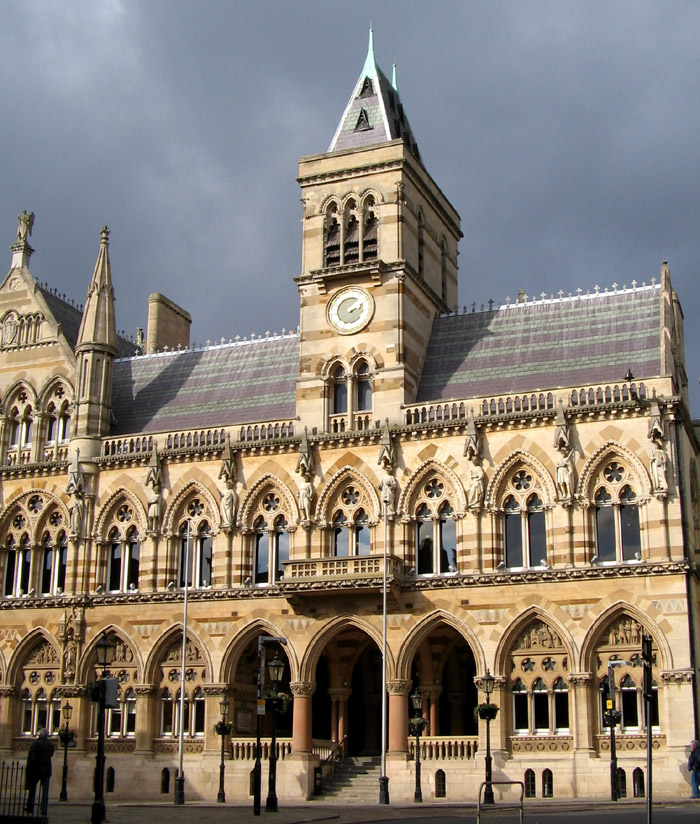

It's a nice ceremony, and you feel good attending it - especially because you know you wouldn't be able to do the same thing in Chinese-occupied Tibet. The question is, does it help? or is it just, as Bob Dylan once said about protest music, a personal (and rather self-righteous) act of disassociation?

I went last year. You can probably read about it in the Suffolk Punch archives, if you have nothing better to do. Then, fired up by the spectacle of the Tibetan flag flapping high up in the wind over a busy street as it should do in Tibet, I formed a Tibet group on Facebook, which most of the people who came to the Guildhall joined.


Unfortunately, joining a Facebook group was all most of them were prepared to do. Assuming, naively, they would be behind me, I wrote a manifesto for the group promising non-violent action against politicians, businesses and institutions (like Northampton University) who maintained close associations with China when people were dying in Tibet. I said we would embarrass them publically. Bombard them with emails. Protest outside their buildings.

And within hours the people in the Facebook group began quitting in their droves.

I don't doubt that the majority of those people earnestly want to end the suffering in Tibet. The problem, as I have since realised, is that the power behind the annual ceremony is an uncritical follower of His Holiness The Dalai Lama, whose strategy of patience, of attrition, of good faith in the ultimate kindness and wisdom of the Chinese Communists, has helped to perpetuate the holocaust in his country. The Dalai Lama doesn't even seek independence from China. Speaking on behalf of his people on his own website, he calls the imagined national disinterest in this "a historical fact". Despite the colonisation of Tibet, the arrests, the torture, the forced sterilisations, the self-immolations, the stripping of Tibet's natural resources, His Holiness persists in the belief that his people can live autonomously under the Chinese.


As I have said before (and as a Buddhist I take no pleasure in thinking it) that view is either naive or stupid. But the organiser of the Guildhall ceremony and the many people who cluster around her are ardent admirers of the Dalai Lama like almost everybody in the West. He is a charming, intelligent man and to some extent he meets our Orientalising need for a quirky little Eastern guru to replace our discredited Popes and Archbishops.

What they are about, the Guildhall people, is seeking solutions that satisfy all. Asking our politicians to talk to their party leaders who in turn gently persuade the Chinese to change. They are about the right prevailing because it is right and everybody being good deep down. They don't want action. They don't want antagonism. Which is all very well when you live a comfortable middle class life in England. Or a comfortable 'simple' monk's life in India.

------------------------------------------------------------------------------------------------------------

Surprisingly, the Guildhall ceremony organiser has invited me back this year with a note that says, "Sorry about the misunderstanding." But the misunderstanding was on my part, not hers. I didn't have as clear a picture then of where the fault lines lie in the Free Tibet movement. They are prepared to wait another sixty years for it, so it seems, while weeping big salty tears over the names of the dead, and I'm not.

So I won't be going to the flag raising, although I hope they have a nice day. Frankly, I'd do just as much good for the people of Tibet by staying in bed. Not that my own more direct and cantankerous action in the past year has helped a hell of a lot. They're still burning their own bodies to get someone to listen. And universities are still making big sums of money by nestling down in the lap of the Communist killers.


Monday, February 18, 2013

Tibet: The Honour Roll That Shames


Just saw the Northampton University Vice-Chancellor in the building. A rare sighting. Characteristically, he was showing around someone in a suit. Here's a message for him.

Self-Immolations in Tibet Since 2009
Last Updated: February 17, 2013, 15:06 EST

NamlhaTsering
Drugpa Khar
Lobsang Namgyal
Konchok Kyab
Tsering
Tsering Tashi
Wangchen Kyi
Kunchok Pelgye
Pema Dorjee
Lobsang Geleg
Sungdue Kyab
Kunchok Kyab
Tsering Namgyal
Wande Khar
Sanggye Tashi
Kelsang Kyab
Gonpo Tsering
Kunchok Tsering
Wangyal
Sangay Dolma
Tamdrin Kyab
Tamdrin Dorjee
Lubhum Gyal
Tsering Dundrup
Wangchen Norbu
Sangdag Tsering
Chagmo Kyi
Khabum Gyal
Tenzin Dolma
Nyangchag Bum
Nyangkar Tashi
Gonpo Tsering
Jinpa Gyatso
Dorjee
Samdrup
Dorjee Kyab
Tamding Tso
Tsegyal
Dorjee Lhundrup
Tsewang Kyab
Lhamo Tseten
Tsepo
Tenzin
Dorje Rinchen
Dhondup
Lhamo Kyab
Tamdin Dorje
Sangay Gyatso
Gudrub
Yangdang
Passang Lhamo
Lobsang Damchoe
Lobsang Kelsang
Lungtok
Tashi
Chopa
Dolkar Tso
Lobsang Tsultrim
Losang Lozin
Tsewang Dorjee
Dickyi Choezom
Ngawang Norphel
Tenzin Khedup
Tamdin Thar
Rikyo
Dargye
Dorje Tseten
Choepak Kyap
Sonam
Chimey Palden
Tenpa Darjey
Lobsang Sherab
Sonam Dargye
Lobsang Tsultrim
Jamyang Palden
Gepey
Dorjee
Rinchen
Tsering Kyi
Nangdrol
Damchoe Sangpo
Lobsang Gyatso
Tenzin Choedron
Sonam Rabyang
Rinzin Dorje
Losang Jamyang
Sonam Wangyal
Tsultrim
Tennyi
Tenzin Phuntsog
Palden Choetso
Dawa Tsering
Tenzin Wangmo
Norbu Damdrul
Choepel
Kayang
Kelsang Wangchuk
Lobsang Kelsang
Lobsang Kunchok
Tsewang Norbu
Phuntsog
Tapey


courtesy of Save Tibet dot org.

Friday, February 15, 2013

Stalker


I just heard two girls at the university talking about their stalkers. I would never wish to undermine the seriousness of stalking when it happens - it must be terrifying - but for the young and beautiful these days a stalker seems to be almost a fashion accessory. Anyone whose gestures of friendship are unwelcome is a stalker. Everyone who smiles at you in the street more than once wants to fuck you. That is the presumption. It is casual, cruel and extremely arrogant.

I was accused of stalking once myself, by a woman who I thought was my friend. A serial fantasist, she told everyone I knew stories about me hanging around on street corners or hiding behind hedges waiting for her, and watching. None of which ever happened; we didn't even live in the same bloody town. But nothing I can ever say or do will take the seed of doubt out of the minds of people who heard those stories. Who saw those texts. So I don't even try.

I did make a pass at her once. I was sad and lonely; I needed a little more than friendship. I didn't think she'd say yes, but I had a go anyway. Even the embarrassment of being turned down would be better than the in-between space my life was occupying at the time. I've never denied that I made a move on her. I wish I hadn't, but I did. In some ways I think I was supposed to, so she could feel better about herself with her husband gone.

If it was a trap I walked into it. If it wasn't a trap I did it anyway. But I didn't stalk her. I've never thought highly enough of any woman I knew to stalk her. The only woman I like enough to stalk is the woman I am with, and I don't have stalk to her.

So please, get over yourselves and be careful how you use that word. You may be wrongly labelling somebody just to feed your own ego. And you risk debasing the word so that when somebody really is being stalked, the people who can help keep her safe don't believe her.

Do we want a world, anyway, of such snobbery and spite? where if you're not "in" you're a freak to be debased and insulted? Where if you misread the social cues in a world full of falsehood you're immediately suspected of being a rapist-in-the-making? I know I don't. I'll leave you to think for yourselves.


Tuesday, February 12, 2013

BING!


I'm putting the finishing touches at the moment to an essay on William Blake. Four poems about childhood from Songs of Innocence and Experience. It's a topic I'd be happy to write about usually, maybe for a book or a poetry magazine, but because it's for my Romanticism module at the uni the bloody thing is driving me mad.

At the start of the year the lecturer Jon Mackley gave us a list of the tenets of Romanticism. I think there were seven, although there may have been four, or sixteen. I've no idea where the notebook is that I wrote them all down in.

Anyway, ever since that first lecture the idea has been that when we analyse a poem in the class or write an essay we're supposed to identify these tenets of Romanticism in the text we're considering. At first Mackley would even say a chirpy BING! and raise a finger in the air every time we named one. Thankfully, he's cut that out now.

I didn't name any of the Romantic tenets in my last essay. I still got a B+ but he said, "Your writing was excellent. It broke my heart not to give you an A." I can't say it broke my heart, Jon, although it did annoy me. I didn't come to university to learn how to parrot other people's words back at them.

Of course, I didn't really come to uni to learn either. I came to get off the dole and put a bit of money in the bank without working. I was too burned out to work, after the ugliness of my last fight with Cruela and the Forces of Mammon.

Now I'm here again, as I say, sitting in an overheated I.T. room with another Romantic essay that has to be submitted by tomorrow. It's written, but I'm having to bend my fine words into contortions to get these goddamn tenets in (the ones I can remember). And my essay will be uglier for their presence, not their absence.

This is education? Afraid so. Like I wrote somewhere, "Monkey do what monkey see, monkey get a nice degree." Which doesn't suit my curmudgeonly, stick-in-the-mud, anti-authoritarian style one bit.

Friday, February 08, 2013

Calling for a New Coalition of Interests


Oliver Twist asking for more in the workhouse.

In two years there will be a General Election, and it may be more significant than any since Margaret Thatcher's first two victories. If the Conservative Party win an outright majority it could signal the death knell of the NHS and any recognisable (and fair) form of Welfare State. Don't even mention what is left of workers' rights, which isn't a heck of a lot. Employees are already working twelve hour shifts without sick pay and getting fired on the whims of their bosses.

The Tories, if they win, will be dragging the country back to a pre-1945, maybe even pre-1845, darkness in which poverty is equated with moral weakness, a good man is expected to know his place and the rich dance on the bodies of the dead. I fully expect the return of the workhouses too, although naturally they won't call them that. They'll be rebranded, a "PLUS" will be affixed to whatever anodyne name they're given, and the poor and the sick will be pushed into them like cattle.

In the light of that, I feel, it's time we formed a coalition of interests to stop them. Most people don't vote because there's "no point" and then complain on their fag breaks because they're on six pounds an hour. And since the Iraq invasion at least - although for some it happened long before that - people on the Left have refused to vote Labour because they cut loose the unions and look after the middle class instead of the poor.

It's a valid point, as far as I'm concerned. Labour isn't "the party of the people" anymore. Not entirely. You could argue that it hasn't been since 1945. I have been disappointed by Labour too many times since I first started voting in the early 80s. But as much as I don't feel they represent me or my interests anymore, they are not the Tories. They are men of good conscience and good instincts, broadly, who have been corrupted by their own idealism as much as their personal ambition. I believe Ed Milliband wants to make Britain a better place, for everybody. Aneurin Bevan cared more about fixing things for his own.

Labour hurt people when it turned away from its roots. When it abandoned specificity to be a party for all. But do we go on nursing our hurt and resentment of the hijacking of our beautiful vehicle while the Tories dismantle the last remnants of it? Do we stand back in splendid purity, showing those posh Labour bastards, while the Tories fuck Britain all the way back to the workhouse?

I say no. Let's get behind Labour, even if we don't fully support them, and give the Tories the biggest hiding they've had since 1997. Let's do it for the poor. Do it for the disabled. Do it for the NHS and the shade of Aneurin Bevan. A Labour victory won't fix everything; there will still be injustice. But at least we'll be fighting back with food in our bellies.

By not voting all we do is empower the Tories. And that's a high cost to pay for self-righteousness, comrades.

Thursday, February 07, 2013

25 Things You Didn't Know About Me. Possibly.


I saw somebody else do this so in a spirit of pure plagiarism, and to take my mind off Hanif Kureishi for ten minutes, I'm now going to list 25 little-known facts about me. If I can think of 25. All of these, despite my reputation for being a smart arse, are 100% true.

1. I was once made captain of my primary school football team. The other ten players promptly went on strike.

2. I wrote my first novel when I was ten, a 33 page revenge western called "Blood Lust".

3. I had a crush on my first teacher Mrs Bevan.

4. I once almost choked on bacon and had to pull it up out of my own throat to survive.

5. At primary school three girls asked to see my "winkie" and when I showed them I got in trouble.

6. I am actually very shy.

7. I once tried to learn Russian so I could read Dostoyevsky in the original. I could only ever remember the word for "fox".

8. I feel sick when I smell beetroot.

9. I once saw a ghost.

10. I have never taken any illegal drug other than marijuana, but mainly because I'm too scared and too cheap.

11. In my twenties I had a pierced ear. I let it grow out when it went crusty.

12. When I was 18 I bought a Wham! record.

13. I once had driving lessons, but I gave up when the instructor shouted at me.

14. I cry frequently. The provocation is usually music.

15. I feel there is something nightmarish about the silent tapping of computers in an I.T. room or an internet cafe.

16. I have a guitar and a flute but I can't play either.

17. I once bought weed from someone who delivered it to your door. He called his business "Deals on Wheels".

18. My greatest fear when I was younger was that I'd go bald in middle age.

19. Once I had an ear infection so bad my ear bled.

20. I first heard my favourite song "Freebird" when I was awake all night with food poisoning.

21. I am not allowed to go near the china at home because I am so clumsy I will definitely break it.

22. I have forgotten what meat tastes like.

23. I nearly drowned once in the shallow end of the swimming pool.

24. I let my neighbour in Earls Barton call me "Graham" for two years because I was too polite to correct his first mistake.

25. I don't talk about my problems because I have a horror of sounding self-indulgent. Although I am.

Dropped Kebabs and Despots: The Last Term of the Last Year Starts to Hurt


from Toothpaste For Dinner.com

I'm nearly at the end of my three years of university now. That's probably a good thing. I tried so hard to be positive about the degree, returning for year three after my summer scrape with the Grim Reaper, but by Christmas the effort had almost done more harm to my psyche than pneumonia did to my lungs.

Why not just be honest? I haven't enjoyed the third year at all. The time I've spent wasting time or getting to know certain people in the corridors and the canteen has been nice. But I wouldn't have done any of the classes, even the ones I chose, if I'd been properly informed about my choices. In fact, the ones I did go for, not really knowing how the modules would be structured, have turned out to be the biggest drag of the lot.

For my dissertation I'm writing about Salman Rushdie, Hanif Kureishi and Meera Syaal. That's fine, in a way. I chose that because the Post-Colonial module was the only one I enjoyed in the second year. But what's the point of writing analyses of other people's books, really? I mean, these in-depth structural breakdowns?

Academics make a good living picking over other people's work like ants on a dropped kebab, so for them you can see the point. But I'd rather write my own book. And when my university is dancing a naked tango with the third worst colonial despot in modern, China (I'd say the United States and Britain were number one and two), everything I write about the aftershock of Empire and our nation's perfidy in India feels rampantly hypocritical.

Whatever. I only have a few more months to do it, and then I'll be shoved out into the world again. Maybe (who knows?) with a BA after my name that will help me get a job I can stand to do when I'd much rather be writing. Then, perhaps, the last three years will all seem to have been worth it. Right now I feel more flat and uninspired mentally than I ever did back in the care work days.

Sunday, February 03, 2013

The Wizard and the Boy


I was in the queue at my local Co-Op yesterday (buying a lottery ticket, phone credit and a bar of chocolate, if anyone's interested), and in front of me were a woman and a boy. I presume he was her son. The boy was probably five, six years old. And I noticed he was staring at me, utterly transfixed, to the point where I became not only embarrassed but also angry at his mother for not reminding him of his manners.

Anyway, he'd been staring at me "for what seemed like an age" (as writers say), when his mother did the worst thing she could possibly have done. She left the boy there to go and fetch something she'd forgotten from the other end of the shop.

The boy continued staring. I wanted to knock him down. But since I couldn't do that, I stared back. This went on for several moments and then the boy relented, curling his lips back over his missing teeth in a nervous smile. Just then his mother returned.

"Hello," said the boy.

"All right mate?" I said.

The boy thought about this for a while. "What's your name?" he asked, a little tangentially I thought.

I was even more embarrassed now. Here I was, a complete stranger, having a conversation with an infant boy in a line in the Co-Op.

"My name's Bruce," I said. "What's yours?"

Again the boy gave the question some thought. Then he turned away from me without speaking. His mother shoved him in the back.

"The man arksed you a question," she said.

"What did you say?" the boy arksed me.

"I said, 'What's your name?'" I reminded him.

Another pause for consideration. He was a reflective boy. "Tyrrell," he said.

The shop assistant shouted, "Next please!" then and they moved away from me to make their purchases. I noticed Tyrrell immediately falling into a conversation with a tall young man at the next register. He told his mum that the man had bought gum and could he have some.

"No you can't!" said his mum. And groceries bought and packed, she hustled him out of the shop.

I've always been jealous of other people's ability to talk to kids. It requires a lack of self-consciousness to be able to relate to someone of Tyrrell's age, and I don't have it. When he was staring at me, I felt exactly as I would have done if I'd been five myself and he, the tough boy in my class at school. That's why I wanted to make him cry.

When I think about it for a moment, though, what must I have looked like to him? A five year old has no sense of time. There are grown-ups, which are his parents and people like them, and there are old people. To Tyrrell I was old, and not only old, but probably strange too. Had he come across men with long hair before? and thick white beards?

I bet he thought I was a wizard from one of the dvds he got to watch on Sunday mornings when his mum had headaches.

Old possessor of the magic arts, queueing in the Co-Op with a big Dairy Milk and a lottery ticket.

Tuesday, January 29, 2013

The Elephant Man: Joseph Merrick Gets a Lynching


I saw David Lynch’s ‘The Elephant Man’ for the first (and I would imagine the last) time the other day. I was more interested in watching Clint Eastwood and Burt Reynolds movies when it was released in 1980, being a late developer culturally in some ways, but I thought, at 48, that I was ready. Friends had told me it was terribly sad. Harrowing even. They said that the suffering of the famously disfigured John Merrick was almost unbearable to witness. Hmmm.

Call me a callous old bastard if you like but I didn’t find it that at all. It might have been, and I’m sure it was for the real man the movie was based on (who was actually called Joseph Merrick), but Lynch and John Hurt laid on the pathos of the Elephant Man’s existence with a giant trowel. He was so completely pitiful in his vulnerability I expected a syrupy children’s movie chorus from lamby glove puppets after every beating he took and every disappointment he sustained.

I would have liked to see how Merrick’s suffering had twisted him. It doesn’t matter whether the contemporaneous accounts they used when writing the screenplay gave any indication of this. Those accounts were written according to the conventions of their time just like anything else is, and the people who met Merrick ‘saw’ him with an agenda of their own. Being harshly treated makes people cruel and angry. I would bet money that once doctors and nurses, and then society folk, began to be kind to Merrick he responded with occasional bursts of temper and spitefulness.

 The real Joseph Merrick. Photographer Unknown. 

The movie has, of course, dated. Merrick’s make-up would have been more convincing if the film had been made in the last ten years; and Lynch’s Victorian-barkers-and-midgets-in-top-hats kind of surrealism, though undoubtedly a filmic surprise 33 years ago, when realism was more commonly used by directors, just looks transparent and precious now. It's something we’ve all seen before. The language of alternative cinema has been absorbed into the mainstream since the 80s. It’s routinely regurgitated nowadays in the form of music videos that flash by unwatched on tv while we’re talking to our friends.

So anyway, that’s one unanswered question from my youth finally answered. Is ‘The Elephant Man’ any good? For a slow afternoon when you have nothing better to do, yes; but don’t expect the grand emotion of an opera. I wonder if I should answer the other great question hanging over from those long-gone days and watch ‘Star Wars’. See what all the fuss was about there.

I think not. At the last reading Alan Moore gave, the great bearded one said 'Star Wars' was when SF started going downhill. I'll just take Alan's word for it and save myself the time, the money and the inevitable dribbling, remote-control-dropping, two hour nap that the movie would almost certainly cost me.

Thursday, January 24, 2013

Judy, Waylon and Me


                                                       photo by Gerald Zoerner

I have spent most of the day at the university, tackling a horrendous assignment. It's an "explication" (which is a horrendous word) of an essay about gender by Judith Butler, the American post-structuralist philosopher. I don't get on with philosophy at all and I've been bashing my brains against Judy's (undoubtedly) brilliant wanderings for a week at least. I've also been trying to work out what the hell "explicating" an essay on someone's theories about gender has got to do with English literature. I know I'm studying women's writing this year, but we didn't have an essay about Karl Marx to do before we studied Dickens.

I had more fun this morning playing Waylon Jennings' Greatest Hits CD before I came out. Not the famous leather-look, gold-leaf-lettered one from the Seventies (although I bought that on vinyl when it was released and still have it in my spare room), but the one that RCA released many years later with about ten more tracks on it. I put it on as I was having my bath and engaging in the intense personal grooming I undertake before I come out every day. Waylon was glorious back then and still is, in my mind. A real philosopher king. He hunkers in there like Hunter S. Thompson, as an ideal; an ideal of self-realization and personal freedom that encourages me to be myself without apology (not that I can help it anymore). When I listened to him sing "Don't Y'All Think This Outlaw Bit's Done Got Out Of Hand" this morning, it didn't matter that I was going to the university to spend the whole day sitting at a computer boring myself shitless. Temporarily I could have been ten feet tall.


Saturday, January 19, 2013

Happy Birthday Janis Joplin


Today is the birthday of Janis Joplin, my mother's favourite singer (and one of mine). It's pointless saying how old she would have been because she isn't. And we don't need to crank any more tragedy out of her early death. Let's remember her life instead.

There were a lot of incredible artists in the second half of the Sixties, but none could wrench the passion out of a song like Janis. I'm not sure if she meant a word of what she was saying. Maybe she was just punching the clock like the rest of us do. But whenever the band wound up that fierce electric blues Janis made the words sound as if they were pouring out of her heart.


Maybe that's where the perception of her as a tragic figure rather than a dynamic one comes from, I don't know. Nobody sees Jimi Hendrix, my mother's other great hero, as a tragic figure, although he died at 27 just like Janis. But when Jimi was on stage he didn't sing the blues, not in the same way. Most of his stuff wasn't about feeling. It was about the virtuoso from the other side of space destroying evil armies with his wild sonic bombs. Something like that anyway.


Mum had a cassette version of the album Cheap Thrills and we used to sit in the kitchen together listening to it, loud, as we drank red wine. Sometimes we smoked her weed to make the sounds blasting out of her cassette radio even better. I was well into my twenties by then, if there are any moralists out there worried about youth being corrupted.

We shall not see her like again, to paraphrase some poet or other. And when I say that I mean my mother, and Janis. They are associated forever in my mind because of those nights we shared listening to the music. Two delicate - and difficult - souls, gone over to wherever the smoking, drinking souls go.

Don't worry, Mum, no crazy straight girl there is going to flush your marijuana down the loo.


Thursday, January 17, 2013

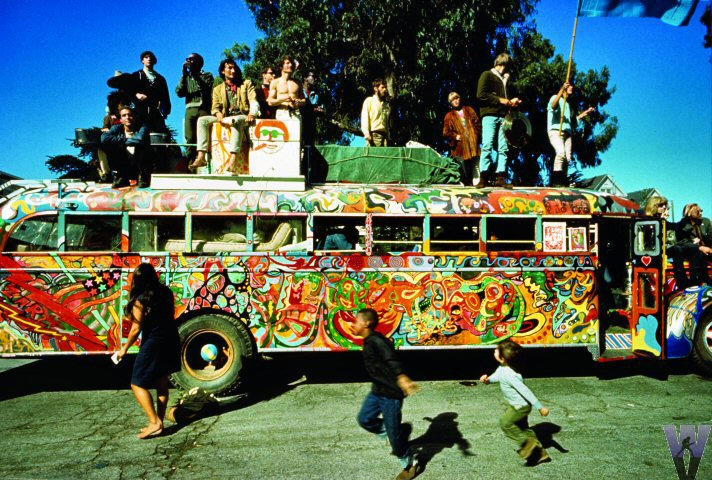
THE MAGIC BUS: KESEY, BABBS, ET AL(LEN)


I’m re-reading Tom Wolfe’s The Electric Kool-Aid Acid Test at the moment, and absolutely loving it. I should be putting all my concentration into the degree I’m doing but I’ve tried that. It made me feel psychotic.

Wolfe’s book is from 1968. My time, or at least the time my heart belongs to (I was only 6 years old when the 60s ended). It’s the story of Ken Kesey and the Merry Pranksters, that famous band of day-glo loonies who turned the world onto LSD.


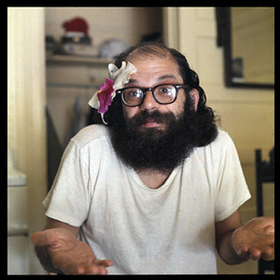
Ken Babbs, who I published in my poetry magazine Blue Fred’s Kitchen, is in it, gloriously so. Allen Ginsberg, my ultimate hero, is in it. Hunter Thompson is in it. Jerry Garcia and the Grateful Dead are in it. Neal Cassady famously drives the Pranksters’ psychedelic bus Furthur. Even Kerouac makes a guest appearance at a party in New York early in the book.

These people have been companions and totems of mine for years. When I read about them it’s like someone telling me that all of the most dynamic and interesting men in the world have rolled into town at the same time. Everything becomes suffused with magic.


It might sound like I’m indulging myself, taking a break from “reality” by re-immersing myself (as if I ever dried off) in all my heroes. But I’m not. Actually I’m reminding myself what reality is when it’s not limited by fear or lack of imagination.

As Kesey himself said (I’m paraphrasing), everybody should be free to be as large as he feels he has it in him to be. Those are powerful words, and a heck of a challenge, not only to society but also to the people within it.

Have I become as large as I feel I have it in me to be? I haven’t even come close. But reading Acid Test reminds me how much I want to keep trying, and how much fun I’ll have in the attempt, even if I’m still nine-tenths unfulfilled potential when they wrap me in my winding sheet.


Better that than living someone else’s dream.


Alina's Imagination

Readers might want to know about an interesting blog I've found. It's called Alina's Imagination and it has some really nice, clear, clever, perceptive writing in it. http://alinasimagination.blogspot.co.uk/