Thursday, September 24, 2020

The Silent Women of 'Don't Look Back'

Sally Grossman with Bob Dylan

There's a poetry documentary shot sometime in the Sixties in which Robert Creeley talks while his then-wife Bobbie listens and throws in occasional observations of her own. But interjections are all she gets to make. She has a place at the table, but her role is to be there as witness to her husband's speech, his insights, to be (I can't help thinking) in her rapt attentive state a sort of boast that reinforces his importance. Creeley, we learned when Bobbie found her own voice, was open about his expectation of the woman he lived with. He did not want to compete with another writer. But conscious or unconscious misogyny were a habit of the times.

bobbielouisehawkins.com 

This afternoon I watched the D.A. Pennebaker masterpiece Don't Look Back for the first time in years and I saw something in it that I'd never seen before: the silence of the women. Several women appear in the film; some make interjections like Bobbie Hawkins and the others say nothing at all. The only exception is Joan Baez, who's extremely vocal, sings songs (mostly Dylan's) and follows Bob from town to town hoping (we learn when we read a little deeper) that he will invite her onto the stage as she had invited him when his star was in the ascendant in America. He doesn't reciprocate. Another woman silenced, at least publicly, although Joan didn't really need Dylan's help. Her reputation as one of folk music's greatest artists is undiminished 55 years after the movie was shot.


Joan Baez

Don't Look Back is about Bob Dylan, of course, and the frantic nature of his growing fame. It's not about Joan Baez, although Pennebaker does seem interested in her as a subject; and Allen Ginsberg has only a minimal role - although he features in the outstanding sequence for Subterranean Homesick Blues that opens the film, and was already infamous enough to need no introduction. But the presence of Sally Grossman seems almost decorative, and Marianne Faithfull sits so quietly in Dylan's noisy hotel room you would hardly know she's there (the grainy black & white film Pennebaker uses makes her harder to see, I have to admit). It's Alan Price who talks and sings, and Donovan who Bob seems almost threatened by until he meets him. Many Dylan fans feel he deliberately owns Donovan by singing It's All Over Now, Baby Blue after the latter's To Sing For You when they are trading songs at the hotel. Bob's is undoubtedly the better song, but Donovan asks him to sing it, and Dylan looks pleased by the request.

Who is the woman who sings with Alan Price backstage at one of the shows and gamely tries to be heard over the chorus of loud male voices? This may be common knowledge among bigger Dylan fans than me (although I have admired him for nearly forty years), and among devotees of Alan Price; but I've been searching on the internet for two days and I can't even find her picture. Nor can I find any information about Jones Alk, other than that she was the first wife of Howard Alk, the bearded, bespectacled, bear-like figure in the movie who seems ready to throw people out of the hotel room for Bob when a beer bottle is dropped out of the window.

Howard was a filmmaker and Jones is clearly recording sound throughout the film. So you might not expect her to speak anyway. But in a long sequence toward the end of the film, when Dylan confronts an admirably restrained reporter from Time magazine, Pennebaker makes the curious decision to shoot the interview from such an angle that only Dylan and Jones can be seen, notwithstanding cutaways to the reporter; other people, the men in Dylan's entourage, can be heard, joining in with Bob's impertinent attack on the reporter in what looks to me like an act of collective bullying (I know many would find that an absurd statement), but they have had their exposure earlier in the movie. Jones is in full view for 6 minutes and says nothing at all; she smokes and listens with rapt attention, as if what she's hearing is provoking the deepest thoughts. Her presence at the table is so similar to Bobbie Louise Hawkins' in its nature and symbolism it can't be a coincidence.

The difference is that Jones doesn't speak at all. I can't be the only one who wants to know if she agreed with Dylan that Time would be improved by collages or that he was onto something when he said each word had its little letter and big letter. I'd like to think that she was really writing a poem in her head as I sometimes do when someone else is talking too much; but I suppose we'll never find out.


Monday, September 21, 2020

Rare and Collectable: Rexroth & Ferlinghetti 'Poetry Readings in the Cellar'


This was recorded in 1957 in the Cellar on Green Street, San Francisco, and released on the Fantasy label. The Cellar, apparently, was a downstairs nightclub that in a previous incarnation was a Chinese restaurant. The album features Kenneth Rexroth, the reluctant and sometimes unacknowledged progenitor of the West Coast bohemian scene, and Lawrence Ferlinghetti, the legendary poet and City Lights bookstore owner, whose most celebrated cultural achievement, perhaps, was publishing Allen Ginsberg's Howl in his Pocket Poets series. Ferlinghetti almost went to jail for that bold visionary act, but thanks to a landmark decision by Judge Clayton Horn, what resulted from the Howl obscenity trial was a liberalisation of poetic expression in the Western world, enormous publicity for Ferlinghetti's store and publishing house and global fame for Ginsberg.

Here, Rexroth and Ferlinghetti read poems and the Cellar Jazz Quintet accompany them, improvising impressively. (To me Rexroth's voice is weirdly like Tom Hanks when he's in deep character.) On the original vinyl lp at least - I haven't heard the cd reissue - the sound is wonderful. I don't have the critical vocabulary to explain why it's so good, being neither a critic nor a musician, but I love the way it transports me, when I hear it, back to the time when High Fidelity was the most advanced technology they had. I could almost look out of my window and see businessmen in macs and fedoras coming home from work in the dark. Sound on cd tends to be so clean and pure all the atmosphere is distilled from it. 

ruth weiss, who waitressed at the Cellar but also mesmerised audiences with her readings there, famously said, 'Ferlinghetti and Rexroth were poets who read over jazz; but jazz was part of me; I swung.' That's true, but it doesn't matter. Both wrote great, intelligent poetry - Rexroth sometimes overtly, angrily political; Ferlinghetti hipper, funny, subtly political - and some of it is represented on this record. They're not jazz poets, they're poets of words and ideas vocalised over microphones, but the Quintet are sensitive accompanists who weave their jazz around and through the orations so they're given greater emphasis and emotional context. Which is to say that you might understand what they say a little easier and give them more attention because of the jazz, and if you're encountering Rexroth for the first time you might need the help.

Highlights for me are Rexroth's 20 minute reading of 'Thou Shalt Not Kill (In Memory of Dylan Thomas)', which at certain points rises to such magnificent rhetorical levels it has echoes of the Moloch section of Howl; I also really like Ferlinghetti's Autobiography. But Ferlinghetti has an impish charm that makes everything he does appealing, even if he sometimes seems a little too cute and doesn't quite get to the meat of the matter. You'd certainly rather spend a night out with him than intense, grumpy old Kenneth, snarling anarchist slogans through his well-groomed moustache. 


Sunday, September 20, 2020

'Ratched' is an Entertaining Let-Down


Ratched arrived on Netflix the other day. It's based on one of American literature's most memorable creations, Head Nurse Mildred Ratched from Ken Kesey's One Flew Over The Cuckoo's Nest. Everybody who read that book, or saw the movie of the same name, was chilled by Ratched's cold, brutal domination of the ward at the acute mental hospital in which. the protagonist, and Ratched's antagonist, R.P. McMurphy arrives after doing time at a prison farm for statutory rape. (How times have changed. Imagine trying to sell that as a heroic backstory now.) He isn't mentally ill; he wants to avoid hard labour for the rest of his sentence - which by any reckoning is profoundly sensible. The question of how mental illness is defined and how it should be treated is of key importance to Kesey's novel and the film.

This new show is, in one respect, a prequel to Kesey's novel because it presents us with the early life of Mildred Ratched. It shows her, in the pilot we watched last night, getting her first job in a mental hospital. She is already displaying the cruelty and menace of her later incarnation and we learn why. The show's star Sarah Paulson even bears some resemblance to Louise Fletcher's Ratched from the movie. But that's where the similarities between original and prequel end.


Ratched is described as a 'psychological thriller drama' or a 'psychological horror drama'. It's genre, and Paulson's Ratched is a grotesque, drawn so large her wickedness is less shocking than it is comedic. This is the sort of tv you watch to laugh at each new grizzly murder or incredibly rude comeback. Kesey's Ratched - and Fletcher's Ratched - was frightening because her evil (if such a thing exists) was coldly banal. I worked with more than one person who Kesey might have modelled his Head Nurse on in my 15 years as a care worker. They were appalling, cruel people, completely lacking in empathy, and they went home every day to partner and children and led utterly normal lives, popular in their communities and untroubled by conscience.

I intend to watch the rest of the series, though. It may be derivative and occasionally predictable; it may be yet another show that depicts the mentally ill as physically ravaged, stooping, body-slashing maniacs (some are, most aren't); but it's also great fun, something colourful and stylish to sit down with for an hour before you go to bed. If you want something deeper you can go back to the movie or the book. Then you'll really learn about the true nature of madness, and the improper exercise of power.


Saturday, September 19, 2020

The Second Wave is Here


Boris Johnson announced yesterday what had been apparent to most of us for some time: the second wave of this coronavirus has arrived. Now, according to the news, the government are considering a second, short, nationwide lockdown to arrest its exponential growth. Whether that will happen or not I don't know. (Obviously.) My guess is that nationwide readjustments will come into effect to the measures that were announced when lockdown was eased. Another ban on visits to other households; perhaps a ban on meetings in parks, although as the colder weather comes in that will be less of a problem anyway. We might see a curfew placed an pubs and restaurants, which they already have in parts of the North. What's certain is that something has to be done, and as Angela Rayner, the Labour Party's deputy leader has said today, all of us should get behind the actions taken if they are indicated by the science. I would add that if the science indicates a complete lockdown, then that's what must be done, regardless of the economic consequences (although if it didn't work last time...). Perhaps I can afford to say this because I'm broke anyway and have nothing to lose except my life and the lives of the people I love. But two people in my partner's family have had Covid-19; others have had scares but were ultimately okay. It's like a small earthquake in your world when you hear somebody close to you has been struck down.

My fear is that the government's scientific advisors are too close to Johnson, Cummings and whoever else makes the political decisions at present to give a truly effective, impartial view of the state of the pandemic and the best strategies to tackle it. That could be my cynicism, of course - as a lifelong doubter of institutions - but having watched most of the broadcasts from Downing Street during the first lockdown, when Professor Whitty stood beside whichever half-bright minister Johnson sent in his place and looked far too meek and humbled for a clever man, I doubt somehow that the scientists have as much influence over government as they should.

Friday, September 18, 2020

Casablanca and Its Warning


Last night's movie at Bard Towers was Casablanca. If you're not familiar with the movie - and younger readers and movie watchers might not be - Humphrey Bogart plays the cynical Rick Blaine, who runs a bar in the unoccupied French territory of Morocco in the early part of WWII. Ingrid Bergman plays Ilsa Lund, the wife of Victor Laszlo (Paul Henreid), a Czech resistance leader who has escaped from a German concentration camp and is seeking passage to America to continue his work against the Nazis. Rick can get him to America because he holds letters of transit given to him by Ugarte, a petty crook, played by Peter Lorre. But the letters were obtained by the murder of two German soldiers, which makes possession of them dangerous, and anyway, Rick doesn't want to get involved. Politics is not for him, he says; he's just a poor bar owner.

And at the beginning of the movie he's serious. This is a wartime film, however, released in 1942, so you wouldn't expect America's most famous flinty, pistol-wielding hero to stand by for too long as the Nazis press their jackboot down on a city run by a French authority that's apparently too weak to assert itself. Rick once loved Ilsa and she broke his heart; that's why he won't help anybody but himself. When he learns that she broke his heart to save him from the Germans as Paris fell, however, Rick begins to see daylight again, and decides to help her and husband. 'I'm no good at being noble,' he tells Ilsa,  'but it doesn't take much to see that the problems of three little people don't amount to a hill of beans in this crazy world.'

That's just one example of some of the richest dialogue you'll ever find in movies. Julius & Philip Epstein and Howard Koch's screenplay, based on the play Everybody Comes to Rick's by Murray Burnett and Joan Alison, gave the world, 'We'll always have Paris,'  and a line I wish I'd written, 'Of all the gin joints in all the towns in all the world, she walks into mine.' Beat that. 'Here's looking at you, kid,' one of the film's most legendary quotes, was allegedly ad-libbed by Bogart. I really want that to be true.

Fans of Casablanca will notice that I've missed one quote. It's the last line of the movie. Rick and Captain Louis Renault (Claude Rains), who's the leader of the French authorities in the city, are standing at the airport in a worryingly thick but no doubt metaphorical fog, having just seen Laszlo and Ilsa off in a plane. Rick has killed Major Strasser (Conrad Veidt), the German officer who has come to arrest him, expecting no resistance from Renault, who throughout the film has protested his complete lack of scruples. Renault, however, is tired of collaboration, and instructs his own officers to 'round up the usual suspects.' As Rick and Renault walk away together, the latter outlines his plan for Rick's escape. 'Louis,' Rick says, 'I think this is the beginning of a beautiful friendship.'

I don't know why, but that seems incredibly poignant watching 78 years later, in our present hothouse political climate. It's regrettable enough that so much of England sees Europe as its enemy now, although the EU itself may have contributed to that alienation with its one-size-fits-all politics. But when an American president is a fascist in everything but name, and has more in common with extremist bullies and dictators than he does with the leaders of France and Germany, you can see how far we've come since the days of the beautiful, pragmatic, peace-delivering international friendships that began in the ferment of World War II.

Thursday, September 17, 2020

The B-Side: Elsa Dorfman's Portrait Photography


'It's my role in the universe to make people feel better,' Elsa Dorfman says in this lovely, gentle, touching documentary, currently streaming on Netflix. Elsa passed away this year on May 30th, leaving a body of work behind unique in its success as well as its lack of pretension. Elsa frequently stood her subjects in front of a white screen and photographed them without props. When she did, however, something magical would happen. Elsa claimed she was only interested in surfaces, but somehow, by capturing what appeared on the surface of her subject, the essence was revealed.

We learn in the film that her camera was one of only six in the world. Maybe that had something to do with the magic of her portraits. It was a Polaroid 20 x 24 inch camera (quite a beast). When Polaroid went bankrupt in 2008, production of the film the camera used ceased. Elsa bought a final year's supply and that was it. Her whole modus operandi had become a relic of the past.

I first became aware of Elsa through her pictures of Allen Ginsberg. The two of them were great friends. Elsa had worked at Grove Press in the 1950s and taken photos of other poet luminaries like Robert Creeley and Charles Olson. The Ginsberg photos have endured, though, possibly because he has endured (to some extent) in the popular consciousness where the other poets haven't. Bob Dylan has certainly endured and Elsa's most famous photograph is of Dylan and Ginsberg together, backstage at the Rolling Thunder tour. In it, Dylan appears to be teaching Ginsberg how to play guitar. It's a brilliant, seductive picture, assumed by almost everybody to have been spontaneously captured.

Except Ginsberg writes in his journal the night before that such a picture would make a wonderful image. Elsa says herself in the movie that he always had one eye on posterity. He would never even send a letter without going down to Grove Press to get it photocopied first, she remembers.

Wednesday, September 16, 2020

Diana Rigg


One thing this blog missed recently is the death of Diana Rigg. It happened sometime last week. We were waiting for her debut appearance in the new tv adaptation of 'All Creatures Great and Small' when we heard. Sadly her first scene as Mrs. Pumphrey came a few days after her passing and the show ended with an image of the actress and her birth and death dates. It was quiet and moving.

I didn't see Diana in 'Game of Thrones' because like her, I didn't watch the show. But her career had blossomed again wonderfully in her seventies, when she began appearing as a succession of formidable grandmothers, some of them eccentric, and in the case of Mrs. Pumphrey, enjoying the freedom age brings to flirt shamelessly without responsibility. She had spoken of her advancing years as a release in a magazine interview.

She was great in those late roles. But of course it's 'The Avengers' for which most of us will remember her. 'The Avengers' is the essence of 1960s style, its cool, its unselfconscious silliness - if you're the best-looking, best-dressed person in the room, if you're the person who, as Dylan would say, knows what's happening, you don't have to take yourself seriously.

They never did. In a show I saw recently, Steed and Emma are out shooting to relax after an adventure in a castle. Emma raises her shotgun to the sky and shoots down a succession of teddy bears, one of which has a bottle of champagne beside it. The next volley of shots brings down two champagne glasses.

If you have to ask why, or if you feel the need to ask why, perhaps, 'The Avengers' just isn't for you.

Tuesday, September 15, 2020

POEM: 'In Amongst My Diminishing Stock of Days'


'In Amongst My Diminishing Stock of Days'

In amongst my diminishing stock of days,
the only good ones are the ones with you:
at home, or walking round a town somewhere,
searching for bookshops and for Roman ruins.
I'm too old now to try to seem to be
what I never was, like when the bosses loved me.

(Bruce Hodder 2020)

Wednesday, May 06, 2020

POEM: A VEGAN MANIFESTO


No animal

ever gives itself

to the hunter’s knife

or shotgun

voluntarily.

That’s horse shit;

and no less

because

a brown-skinned

elder said it.

If you crave

life’s continuation,

the deer, the cow

and the badger do.

Every creature

that walks the Earth

or rides its thermals

wants to live.

They must, then.

Let us share their home.

There’s room

and sustenance enough

to forget the bullet,

to lay down the blade,

to forego the slaughter

of the trawler net.

Saturday, May 02, 2020

The BATTLE OF THE BEANFIELD


In those days wearing beards 

was an arrestable offence.

Hair was gelled back rigid,

and the only value recognized 

as worth your time was money.

It was a cookie cutter age.

Even music was all synthesised 

to squeeze the human out.


That’s why they beat the shit 

out of the hippies at the Solstice.

We’d wanted a free festival 

at Stonehenge on the longest day.

We drove buses there from anywhere

that life had left the land.


Thirteen hundred cops attacked 

six hundred rainbow travellers,

smashing up our heads and buses,

throwing pregnant women on the ground,

and terrifying kids.

One threw a fire extinguisher at me.

Thank fuck his arm was weak.


A reporter for the tv news 

declared it police brutality.


It was a clear move by the government 

against the counterculture,

whose love of drugs and bright clothes,

whose preposterously wild hair,

might offer an alternative 

to the pile of gold they sat on  

that they'd stolen from the poor.


But you know what? Margaret Thatcher’s dead.

And most of her government are dead.

And the chief of police in Wiltshire, dead.

I want to know his secret 

if he’s not, the vicious bastard.


They’re gone. But I’m still standing here.

My beard is even longer than it was then, 

and my heart’s unchanged.


I’m freerer than the Wiltshire wind

that blows around those ancient stones.

It’s just my bones that slow me up these days

especially when it’s cold!


written using things people told me and stuff I read

Wednesday, January 22, 2020

THIS IS MY TRUTH, TELL MY YOURS


SUFFOLK PUNCH is 14 years old this year. I'm sure there are blogs that have been going even longer, but there can't be many. As a form the blog seemed to go out of fashion when Facebook really started gaining traction, other than those that were linked to a specific institution like a university or a business. And how well read they are is anybody's guess, although I came across one from Keele University recently that was exceptional. Business blogs are almost always unreadably bland, presenting a picture of its activities and achievements so sunny and positive no one believes them.

Blogs by individuals probably aren't immediate or interactive enough for the modern audience. Unless my hits counter tells the story of one singularly unpopular blogger. My readership is considerably smaller than it used to be, and my profile as a poet and an editor is much higher. But still I write SP doggedly, stubborn as an old tree stump, determined not to give up. I write a private journal too. I've been doing that since 1987, long before I'd ever heard of the internet. Putting ideas down in (hopefully) well-constructed sentences for anybody who might be interested - that's just what I do. And the content of my blog, although it isn't as revealing as my private journal, must be honest and true to my vision of the world as a poet and an activist (of sorts), or the whole reason for writing vanishes. 

The title of an old album by somebody or other said it best: this is my truth, tell me yours. SUFFOLK PUNCH is, was and always will be the place where, whether anybody else was interested or not, I shared what I was thinking at the time. But not as edicts laid down on tablets of stone; just as statements of opinion or histories of my experiences. When the poems aren't coming, in particular, it's a useful outlet. And even when they are, I don't always want to be hitting social media vainly linking to my published works. I did that when my poetry book came out and nobody bought it anyway.

I'd much rather have a conversation. Show you a little of who I am and see what you come back with. 'Candor ends paranoia' as Allen Ginsberg says. And if the world can be persuaded to drop its guard and talk, we might have a future. It's not working at the moment, with the blog, but I've been at it too long -- i'm in too deep -- to give up on this old horse now.


Friday, January 17, 2020

A VIEW FROM THE 66%


Yesterday we learned from the ONS that 66% of people with epilepsy in this country are unemployed. Since the majority of us with the condition can work, and the JobCentre insists that we must work, and since there is legislation which at least officially forbids disability discrimination, what is the explanation for this? Why are so many people living with epilepsy not also working with epilepsy?

It can only be discrimination that somehow goes under the radar. The discreet binning of applicant files. The 'more suitable candidate' at the interview stage. (Sometimes a candidate without epilepsy will be more suitable of course, but are we to believe that only 34% of people living with epilepsy are worth hiring? A candidate without a significant health condition has considerable advantages at job interviews anyway. Some companies recognise this; many don't.)

The terms and conditions of certain jobs also discriminate against epileptics. The policy warehouses like James & James have of dismissing staff if they are absent three times in one month, for example. It would be harsh on any employee to fire them for sickness, but I might have three days off in January, unavoidably, because of my seizures, and then none until the following April. Having a generic termination policy that makes no allowance for different health conditions is illegal. But no one ever challenges it because they are afraid of losing their job.

The kinder commentators see yesterday's statistics as a reflection of a lack of understanding about epilepsy among employers. If this is all it is -- I'm not convinced -- let me, as someone living with the condition, explain a little about it from the inside out, as it were. My account will be incomplete because everybody's experience of illness is different. But perhaps I can help a few employers, the ones who still consider their staff something other than an endlessly renewable supply of Morlocks; if they're out there, perhaps I can help them to realise that epilepsy is not something to fear, or something which renders a person useless. It's just a health condition, and a non-contagious one, and the person who has it might be the man or woman your company has been waiting for.

THE CONDITION, FROM THE INSIDE

Seizures

I have tonic-clonic seizures. They are the bad ones. The really bad ones. I have warnings before them that last long enough, usually, for me to take off my glasses and sit or lie down somewhere safe. I do this to avoid hurting myself by falling from a standing position.

After the seizure I remember nothing. Sometimes witnesses have described me getting up and behaving in a confused manner. When I do this I should not be disturbed, unless I am endangering my safety. The memory of this confused behaviour, and the pre-seizure warning, return slowly over the day.

All my muscles ache after the seizure. My head pounds too. I also experience a tremendous sense of depression and the desire to be alone. This is the reason why I want to go to sleep. I'm not still ill; I'm not in need of medical attention. I just need time to restore my body and my mind.

Warnings

I have warnings without seizures too, although the symptoms are sometimes identical and every time it happens I think I am about to go to the ground. My warnings tend to take the form of visual and auditory hallucinations: the sudden magnification of tiny details like a blink, or voices suddenly echoing as if a living room had become a great hall.

I experience these warnings all over the place and at any time, although I am more likely to have them when I'm too cold, when I'm over-tired or when I'm excessively anxious. Long work at a computer screen brings them on too.

While a warning is taking place my breath may seem to become heavy and I may not answer you. This is because I am scared. I'm trying to focus in on myself, to control and then regulate my breath, thereby calming my mind.

Each warning leaves me with a headache and a feeling of nausea for at least an hour afterwards.

I sometimes have warnings in clusters. After months without, I can suddenly have eight in two days. Given how poorly that makes me feel, and how frightened, work is sometimes out of the question.

The Psychological Impact

This is probably the least understood aspect of life with epilepsy -- and with any other condition, for that matter. The JobCentre and the various contractors they work with tell you that you mustn't be negative. Positive thoughts create positive outcomes etc etc. The desk jockeys sharing these supposedly inspiring philosophies are nearly always able-bodied and if they have any of the invisible conditions, they never share them with you. Which they would. I know someone who, when attempting a discussion with a JobCentre coach about her severe arthritis, was reminded that she, the coach, worked 40 hours a week with cluster migraines.

As someone living with epilepsy, I face the daily reality that every time I step out of my front door I may collapse in the street, on the bus or in my workplace. I might even die if the seizure is a little worse than usual. I live with a fear of that unknown next hour or six hours or twenty-four hours that never goes away -- it is unsettling on an existential level -- and still, after 15 years, I have a sense of guilt because I am not as healthy as I used to be.

Consequently I have withdrawn from many social situations because I no longer feel safe in them. Where I feel safe is in my home, surrounded by familiar objects and soft places for me to fall. But I withdrew from people too, a few years ago, some who might even have had some feeling for me, and when I did that I fell into a depression that lasted seven or eight months. 

But I kept my job throughout that long and dark period. I never missed a day through sickness. In fact, an epileptic learns to perform wellness, almost unconsciously, as a way of reassuring people about his or her acceptability, their normality, so most probably didn't even know I was sick. 


CLOSING

A few years ago, a tremendous service was done to dementia care and research by the popularising of the dementia champions concept. Advocacy was encouraged and awareness raised; even MPs were declaring themselves champions at one point, although their zeal was predictably short-lived.

Epilepsy needs its champions too. There needs, perhaps, to be a co-ordinated national campaign led by figures with high public profiles to put epilepsy centre stage for once -- it has a marginal to non-existent media presence -- and educate people, employers and potential work colleagues included, about what it really involves.

It's either that or leave us squeezed forever between a JobCentre that doesn't want to give us benefits and a working world that doesn't want to give us a chance. Or maybe the lives of people with disabilities don't matter anymore, notwithstanding the bullyingly motivational speeches given to us by employment experts with loads of training under their belts, but no idea what it's really like in the hot seat.

Sorry, but I think it's that.


Friday, December 27, 2019

PERSON OF THE YEAR 2019: KATE TEMPEST & GRETA THUNBERG


Every year at SUFFOLK PUNCH, as its multitude of readers know, I give out an entirely meaningless and unprofitable award to the person who I think has distinguished himself or herself in the previous twelve months. Last year the winner was clear for me. It had to be Alexandria Ocasio-Cortez. This year the choice is a little harder. There are two clear winners, each of whom have moved and inspired me tremendously in their way. So I have decided to declare 2019's Person of the Year award a tie and give out absolutely nothing except my thanks to two separate people.

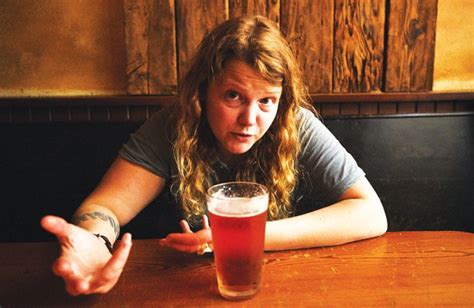
Kate Tempest (above) has been around for a few years now but I only became aware of her at the end of last year. When I bought her album 'Let Them Eat Chaos' it had an effect on me emotionally like nothing had since 1982 when I first heard Bob Dylan sing 'The Ballad of Hollis Brown'. I actually cried real, hot tears. And I still feel that way every time I listen to her. The poems she recites over music are intense, profound and beautifully written. 

The other winner of my award has won just about every other award as well this year. It's climate change activist Greta Thunberg (below):


Greta has inspired a generation of young people to believe in something other than the accumulation of property, white goods and knick-knacks. That alone is a miracle. In her epic quest to convince the old and the powerful that their greed and rapaciousness is going to kill us all, she has also given hope and a renewed sense of commitment and determination to those of us who have been to the barricades before and lost too many times. We may lose again. But Greta has made us realise that if we do, the planet dies. So staying at home warmed by our own cynicism is no longer an option. (Bruce)