Wednesday, May 06, 2020

POEM: A VEGAN MANIFESTO


No animal

ever gives itself

to the hunter’s knife

or shotgun

voluntarily.

That’s horse shit;

and no less

because

a brown-skinned

elder said it.

If you crave

life’s continuation,

the deer, the cow

and the badger do.

Every creature

that walks the Earth

or rides its thermals

wants to live.

They must, then.

Let us share their home.

There’s room

and sustenance enough

to forget the bullet,

to lay down the blade,

to forego the slaughter

of the trawler net.

Saturday, May 02, 2020

The BATTLE OF THE BEANFIELD


In those days wearing beards 

was an arrestable offence.

Hair was gelled back rigid,

and the only value recognized 

as worth your time was money.

It was a cookie cutter age.

Even music was all synthesised 

to squeeze the human out.


That’s why they beat the shit 

out of the hippies at the Solstice.

We’d wanted a free festival 

at Stonehenge on the longest day.

We drove buses there from anywhere

that life had left the land.


Thirteen hundred cops attacked 

six hundred rainbow travellers,

smashing up our heads and buses,

throwing pregnant women on the ground,

and terrifying kids.

One threw a fire extinguisher at me.

Thank fuck his arm was weak.


A reporter for the tv news 

declared it police brutality.


It was a clear move by the government 

against the counterculture,

whose love of drugs and bright clothes,

whose preposterously wild hair,

might offer an alternative 

to the pile of gold they sat on  

that they'd stolen from the poor.


But you know what? Margaret Thatcher’s dead.

And most of her government are dead.

And the chief of police in Wiltshire, dead.

I want to know his secret 

if he’s not, the vicious bastard.


They’re gone. But I’m still standing here.

My beard is even longer than it was then, 

and my heart’s unchanged.


I’m freerer than the Wiltshire wind

that blows around those ancient stones.

It’s just my bones that slow me up these days

especially when it’s cold!


written using things people told me and stuff I read

Wednesday, January 22, 2020

THIS IS MY TRUTH, TELL MY YOURS


SUFFOLK PUNCH is 14 years old this year. I'm sure there are blogs that have been going even longer, but there can't be many. As a form the blog seemed to go out of fashion when Facebook really started gaining traction, other than those that were linked to a specific institution like a university or a business. And how well read they are is anybody's guess, although I came across one from Keele University recently that was exceptional. Business blogs are almost always unreadably bland, presenting a picture of its activities and achievements so sunny and positive no one believes them.

Blogs by individuals probably aren't immediate or interactive enough for the modern audience. Unless my hits counter tells the story of one singularly unpopular blogger. My readership is considerably smaller than it used to be, and my profile as a poet and an editor is much higher. But still I write SP doggedly, stubborn as an old tree stump, determined not to give up. I write a private journal too. I've been doing that since 1987, long before I'd ever heard of the internet. Putting ideas down in (hopefully) well-constructed sentences for anybody who might be interested - that's just what I do. And the content of my blog, although it isn't as revealing as my private journal, must be honest and true to my vision of the world as a poet and an activist (of sorts), or the whole reason for writing vanishes. 

The title of an old album by somebody or other said it best: this is my truth, tell me yours. SUFFOLK PUNCH is, was and always will be the place where, whether anybody else was interested or not, I shared what I was thinking at the time. But not as edicts laid down on tablets of stone; just as statements of opinion or histories of my experiences. When the poems aren't coming, in particular, it's a useful outlet. And even when they are, I don't always want to be hitting social media vainly linking to my published works. I did that when my poetry book came out and nobody bought it anyway.

I'd much rather have a conversation. Show you a little of who I am and see what you come back with. 'Candor ends paranoia' as Allen Ginsberg says. And if the world can be persuaded to drop its guard and talk, we might have a future. It's not working at the moment, with the blog, but I've been at it too long -- i'm in too deep -- to give up on this old horse now.


Friday, January 17, 2020

A VIEW FROM THE 66%


Yesterday we learned from the ONS that 66% of people with epilepsy in this country are unemployed. Since the majority of us with the condition can work, and the JobCentre insists that we must work, and since there is legislation which at least officially forbids disability discrimination, what is the explanation for this? Why are so many people living with epilepsy not also working with epilepsy?

It can only be discrimination that somehow goes under the radar. The discreet binning of applicant files. The 'more suitable candidate' at the interview stage. (Sometimes a candidate without epilepsy will be more suitable of course, but are we to believe that only 34% of people living with epilepsy are worth hiring? A candidate without a significant health condition has considerable advantages at job interviews anyway. Some companies recognise this; many don't.)

The terms and conditions of certain jobs also discriminate against epileptics. The policy warehouses like James & James have of dismissing staff if they are absent three times in one month, for example. It would be harsh on any employee to fire them for sickness, but I might have three days off in January, unavoidably, because of my seizures, and then none until the following April. Having a generic termination policy that makes no allowance for different health conditions is illegal. But no one ever challenges it because they are afraid of losing their job.

The kinder commentators see yesterday's statistics as a reflection of a lack of understanding about epilepsy among employers. If this is all it is -- I'm not convinced -- let me, as someone living with the condition, explain a little about it from the inside out, as it were. My account will be incomplete because everybody's experience of illness is different. But perhaps I can help a few employers, the ones who still consider their staff something other than an endlessly renewable supply of Morlocks; if they're out there, perhaps I can help them to realise that epilepsy is not something to fear, or something which renders a person useless. It's just a health condition, and a non-contagious one, and the person who has it might be the man or woman your company has been waiting for.

THE CONDITION, FROM THE INSIDE

Seizures

I have tonic-clonic seizures. They are the bad ones. The really bad ones. I have warnings before them that last long enough, usually, for me to take off my glasses and sit or lie down somewhere safe. I do this to avoid hurting myself by falling from a standing position.

After the seizure I remember nothing. Sometimes witnesses have described me getting up and behaving in a confused manner. When I do this I should not be disturbed, unless I am endangering my safety. The memory of this confused behaviour, and the pre-seizure warning, return slowly over the day.

All my muscles ache after the seizure. My head pounds too. I also experience a tremendous sense of depression and the desire to be alone. This is the reason why I want to go to sleep. I'm not still ill; I'm not in need of medical attention. I just need time to restore my body and my mind.

Warnings

I have warnings without seizures too, although the symptoms are sometimes identical and every time it happens I think I am about to go to the ground. My warnings tend to take the form of visual and auditory hallucinations: the sudden magnification of tiny details like a blink, or voices suddenly echoing as if a living room had become a great hall.

I experience these warnings all over the place and at any time, although I am more likely to have them when I'm too cold, when I'm over-tired or when I'm excessively anxious. Long work at a computer screen brings them on too.

While a warning is taking place my breath may seem to become heavy and I may not answer you. This is because I am scared. I'm trying to focus in on myself, to control and then regulate my breath, thereby calming my mind.

Each warning leaves me with a headache and a feeling of nausea for at least an hour afterwards.

I sometimes have warnings in clusters. After months without, I can suddenly have eight in two days. Given how poorly that makes me feel, and how frightened, work is sometimes out of the question.

The Psychological Impact

This is probably the least understood aspect of life with epilepsy -- and with any other condition, for that matter. The JobCentre and the various contractors they work with tell you that you mustn't be negative. Positive thoughts create positive outcomes etc etc. The desk jockeys sharing these supposedly inspiring philosophies are nearly always able-bodied and if they have any of the invisible conditions, they never share them with you. Which they would. I know someone who, when attempting a discussion with a JobCentre coach about her severe arthritis, was reminded that she, the coach, worked 40 hours a week with cluster migraines.

As someone living with epilepsy, I face the daily reality that every time I step out of my front door I may collapse in the street, on the bus or in my workplace. I might even die if the seizure is a little worse than usual. I live with a fear of that unknown next hour or six hours or twenty-four hours that never goes away -- it is unsettling on an existential level -- and still, after 15 years, I have a sense of guilt because I am not as healthy as I used to be.

Consequently I have withdrawn from many social situations because I no longer feel safe in them. Where I feel safe is in my home, surrounded by familiar objects and soft places for me to fall. But I withdrew from people too, a few years ago, some who might even have had some feeling for me, and when I did that I fell into a depression that lasted seven or eight months. 

But I kept my job throughout that long and dark period. I never missed a day through sickness. In fact, an epileptic learns to perform wellness, almost unconsciously, as a way of reassuring people about his or her acceptability, their normality, so most probably didn't even know I was sick. 


CLOSING

A few years ago, a tremendous service was done to dementia care and research by the popularising of the dementia champions concept. Advocacy was encouraged and awareness raised; even MPs were declaring themselves champions at one point, although their zeal was predictably short-lived.

Epilepsy needs its champions too. There needs, perhaps, to be a co-ordinated national campaign led by figures with high public profiles to put epilepsy centre stage for once -- it has a marginal to non-existent media presence -- and educate people, employers and potential work colleagues included, about what it really involves.

It's either that or leave us squeezed forever between a JobCentre that doesn't want to give us benefits and a working world that doesn't want to give us a chance. Or maybe the lives of people with disabilities don't matter anymore, notwithstanding the bullyingly motivational speeches given to us by employment experts with loads of training under their belts, but no idea what it's really like in the hot seat.

Sorry, but I think it's that.


Friday, December 27, 2019

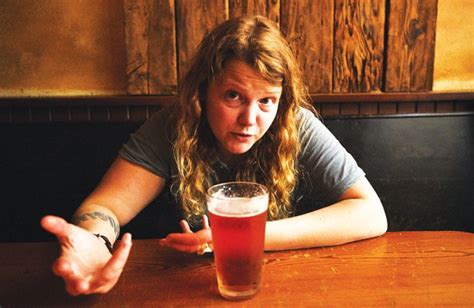
PERSON OF THE YEAR 2019: KATE TEMPEST & GRETA THUNBERG


Every year at SUFFOLK PUNCH, as its multitude of readers know, I give out an entirely meaningless and unprofitable award to the person who I think has distinguished himself or herself in the previous twelve months. Last year the winner was clear for me. It had to be Alexandria Ocasio-Cortez. This year the choice is a little harder. There are two clear winners, each of whom have moved and inspired me tremendously in their way. So I have decided to declare 2019's Person of the Year award a tie and give out absolutely nothing except my thanks to two separate people.

Kate Tempest (above) has been around for a few years now but I only became aware of her at the end of last year. When I bought her album 'Let Them Eat Chaos' it had an effect on me emotionally like nothing had since 1982 when I first heard Bob Dylan sing 'The Ballad of Hollis Brown'. I actually cried real, hot tears. And I still feel that way every time I listen to her. The poems she recites over music are intense, profound and beautifully written. 

The other winner of my award has won just about every other award as well this year. It's climate change activist Greta Thunberg (below):


Greta has inspired a generation of young people to believe in something other than the accumulation of property, white goods and knick-knacks. That alone is a miracle. In her epic quest to convince the old and the powerful that their greed and rapaciousness is going to kill us all, she has also given hope and a renewed sense of commitment and determination to those of us who have been to the barricades before and lost too many times. We may lose again. But Greta has made us realise that if we do, the planet dies. So staying at home warmed by our own cynicism is no longer an option. (Bruce)

Wednesday, November 13, 2019

NORTHAMPTON NEWS: KING'S GAMBIT ALBUM FUNDRAISER

image: www.walnut-tree.co.uk

Northampton band King's Gambit have announced a Kickstarter project to raise money for a new album. They need to raise £2,500 before December 17th (I think that's the date). Can anyone help? Clink the link below to see what special rewards different pledges will get you.And know that you will be adding to the general level of beauty in the universe.


To whet your appetite, here's a poem I wrote after seeing the band one day last summer.


KING'S GAMBIT PLAY THE MARKET SQUARE


King’s Gambit are tuning up on stage
as we shelter, cow-like, from the lashing rain.
We’re under the tarp of a market stall,
our coats zipped up. There’s a crowd of us.
I’m grumpy. I came to watch the band,
not drown. But over Jimmy’s End,
some blue appears in the Stygian gloom.
So maybe we will have our show.
Meanwhile, a New Orleans-style jazz band
marches through the deluge playing.
The rain soaks through their clothes,
but they are smiling anyway. This moment’s theirs;
if they get pneumonia, so be it.
On stage the band are looking ready.
But still it’s raining bloody cats and dogs.
They are facing forty empty seats
and the blue patch at Jimmy’s End’s gone black.
Will they play? We wonder what will happen.
I remember Justin at the Bardic Picnic,
his strip dance when the heavens opened.
I won’t do that, but we could chant no-rain
like Woodstock hippies to end the flood.
I’m building up to suggesting it
when the clouds part inexplicably
as if two hands had separated them,
as if King’s Gambit had brought the rain
to add a little extra showmanship.
Before the band have even started playing
their folkbeat with a Shoe Town vibe,
all the seats are full, and forty bums are wet.
But one song in and all the crowd forget.
I long to jump out of my seat and dance
in front of everybody, like a dick,
but wallflowers need a lot of beer for that.
I’ve just had Sprite for breakfast.


.


.


Wednesday, November 06, 2019

Review: Barry Tebb Collected Poems 1964 - 2016


This book represents 52 years of serious work by a poet of great skill and sensibility. Barry Tebb believes in the importance of his art in an age when cynical detachment is the requisite posture for a reputation, at least in the creative alleyways where I’ve made camp (more by accident than design). Elsewhere, it’s enough just to write increasingly insipid imitations of the generation that came before you these days. Maybe the readership no longer believes in poetry as a high and possibly holy work either:


Armitage, I name you, a blackguard and a knave,

Who knows no more of poetry than McGonagall the brave,

Yet tops the list of Faber’s ‘Best Poets of Our Age’.


Barry Tebb ‘James Simmons R.I.P.’


That’s from Barry’s poem ‘James Simmons R.I.P.’ It’s one of the great pieces in this collection, a paean to a poet largely erased from the histories because his style had become unfashionable and his personality difficult. Armitage challenges nobody; his demeanour and his poetry are radio friendly. The job of poets in the mainstream now isn’t to make the reader look up a reference or be truly and genuinely moved.


The only Simmons poem I have been able to find is about two people having sex on a train. It’s rambunctious and very funny. But Barry says of Simmons ‘You bared your soul in a most unfashionable way.’ This is something Barry’s own poetry does too (and mine, perhaps). We learn, reading from cover to cover as I have done, about his relationship with Brenda Williams, a poet of considerable gifts herself and one who, one day, absolutely must be ‘discovered’ by feminist scholars – if this doesn’t happen, there is no justice:


I remember the bungalow at Rawdon

Where we met, burning coals could never warm it,

Living there alone was like wearing a hair shirt.

I had reached the end of childhood, the part

With jelly, ludo and Rupert Bear. You came

With a friend who announced, ‘There’s no one here

Who’s not neurotic.


Barry Tebb ‘Cut Flowers’


The lives of these two extraordinary poets were as filled with love, sadness, tragedy, waste and beauty as all of our lives, I would imagine. But despite their problems, despite what might be called (though the term is perhaps uninformed) the failure of their marriage, Barry and Brenda remained intensely close, their lives interwoven, and when Brenda died, the poetry Barry wrote is heartbreaking and beautiful. Why such sincerity is no longer valued puzzles and annoys me. Reading his poem ‘Your Dying’ I feel my mother’s end beating hard in my chest:


You were strapped down and I strapped up, too far

To grasp your desperate hand. For once your terror was plain,

You’d never come home to your eight cats again.


Barry Tebb ‘Your Dying’


The centrepiece of these ‘Collected Poems’ is ‘Bridge Over the Aire’, an epic, 82-page, five book poem about Leeds and first love. Barry was born in Leeds, a Leeds he returns to as we all go home; but little of his Leeds remains:


My eyes wandered over the Aire at the

Coal barges as they snaked beneath the bridge

In black tarpaulin shrouds and clouds of steam

Hissed from Easy Road Laundry


Barry Tebb ‘Bridge Over the Aire, Book One’


In crisis, perhaps, facing misfortune (‘Luck, where did I leave you?’) Barry walks the streets of his youth, those that remain, reconsidering his own choices (‘I own no property but a book’); and the past and the present accompany him wherever he goes:


With every car alarm

I hear the air raid

Siren’s song, Waterloo Road’s

Bomb hole big enough to hold

A bus that could not stop


Barry Tebb ‘Bridge Over the Aire, Book One’


But most of all, on Barry’s journey home, he thinks of Margaret, his first love:


Why does your image haunt me

Night and day?

Lank February grass

Pale lemon straw

The colour of your hair

Your voice in dreams

“I am here, I am waiting.”


Barry Tebb, ‘Bridge Over the Aire, Book One’


The whole poem is haunting, filled with nostalgia and its attendant sense of desperate loss; it is also romantic, enormously so, in a way that no poet who wishes to be considered sophisticated would dare to be anymore. But those who practice a distant art, a carefully neutral or emotionally superficial art are lying to us about human experience. Life is as lovely as it is raw and terrible. In the midst of the beauty and the chaos we have poetry, which is flexible enough to glorify the magic and make at least partial sense of our despair. If it doesn’t speak to the core of our being about the things that frighten us, sadden us and ennoble us then it’s really no more important than balloon twisting at a children’s party.


We are standing on the corner of Falmouth Place

We are standing by the steps to the Aire

We are standing outside the Maypole

Falling into Eden.


Barry Tebb, ‘Bridge Over the Aire, Book Five’


Published by Sixties Press, 2016 
ISBN: 978-1-905554-31-7 


Tuesday, September 10, 2019

Northampton News: The Bardic Picnic

This year's Bardic Picnic takes place on Sunday 15th September, that's this coming Sunday, on the Racecourse at the Umbrella Fair Pavilion. The Racecourse is a perfect place for the artists of the area to meet and engage in friendly song, dance and poetical competition. The Bardic tradition goes back to medieval times at least. And the Racecourse has been a place of communal activity in Northampton for centuries.

Unofficial race meetings were held there until 1681, at which point they were stopped because of the number of accidents. As much as I disapprove of horse racing, I can imagine the roaring, cheering (and probably at times dangerous) atmosphere at the meetings. The sense of freedom gained by hardworking people as they watched those marvellous wild creatures charge must have been exhilarating.

Between 1778 and 1882, apparently, the area now known as the Racecourse was called Freeman's Common and local freemen grazed their cattle there. That name has resonances in the modern age even if ideas about farming and the use of animals have to change.

With the aid of Lord Spencer, the park had also been put back into service as a racecourse fifty-some years earlier, according to the histories, and races continued until 1904, when they were banned because of the number of fatal accidents involving jockeys and spectators.

What ghosts the bards and strummers and crafters will walk in the presence of on Sunday! You can sense them if you sit there alone for long enough anywhere in the park and open your mind.

For me as a poet it is the Racecourse's history as a place of public executions that resonates most strongly. Hundreds were killed there between 1715 and 1818 (and probably none of them rich).

My rhymers 'Jack the Bastard' and 'The Bastard's Return' were inspired by a gang of highwaymen who were hanged on the Racecourse. One of the Culworth gang, as they were called, left a poem when he stole from a farm. Artists and outlaws: don't they have at least a little in common when capitalism's clear mission is to flatten the human spirit and transform us all into homogeneous economic units?

Along with the annual contest to find a Northampton Bard who will hold the position for a year and a day, visitors on Sunday can expect live music from Jono & the Uke Dealers, Kenneth J Nash and Katie Paton, among many others, as well as vegetarian food and lots of stalls. It's free too, which is another great incentive to toddle along if you have nothing else to do that day.


Wednesday, September 04, 2019

Review: Once Upon a Nervous Breakdown


eBook from www.somapublishing.com


ONCE UPON A NERVOUS BREAKDOWN is a new book of poetry by John Patrick Robbins, boss of Whiskey City Press. It's a strong book. Occasionally it's an outrageous book (for all the right reasons), linked, if not sequentially, then thematically:

     What would I write about if not for women and whisky?

     Who the fuck knows but I doubt you would be reading my work.

      ('We All Got Issues')

Not all of the poems are about women and whisky. Some are about loyalty. Some are about the trials of publishing. But they're all about the poet's responses (or the responses of one of his characters), to what he encounters: a life lived in the raw, retold in the raw.

And it's an interesting quote, the one above, from somebody who founded a poetry site dedicated to 'all things bar-room.' Is John Robbins admitting he's just an entertainer giving the audience what he thinks they want?

No. But he's partly right about reader expectations. Some poets (and poets are the main readers of poetry) think that 'women and whisky' are the sole indicators of truth and authenticity, forgetting that to a lonely care assistant four walls and nights in with tea and beans on toast might be authentic.

There are at least three different voices in these poems. One is deeply, and credibly, cynical:

     […] large gatherings only seem to serve up victims to mass shootings.

     ('Zen')

Some poems push the boundaries of good taste so far, you might even feel a little guilty for laughing when you read them:

     Of course, I won't even go into that night I pissed in a friend’s fish tank.

     I believe I may have what some would describe as a drinking problem.
     ('Snub Nose')
That deliberately jejune humour is the hallmark of one of Robbins' other magazines 'Under The Bleachers'. It offends some and delights others and the magazine ploughs on regardless. But here it has an intent as serious as the poems that drip with cynicism. 
What's the intent? To be heard, I think, without being seen, or exposed:
     "The page is all I got sweetheart."
     ('And So It Was The End.')
I detect a fragile and deeply hurt man at the heart of these poems hiding his pain behind masks. He seems to reveal himself more than once and when he does, the effect is pronounced:
     I broke my soul somewhere along this journey.
     ('Mixed Signals')
     I contemplated suicide but you seemed more appealing than a fast ticket out.
     ('To My Best Gal')
But just when I think I've nailed him, through this book, I remember that Robbins is known to his friends as Coyote. Who's Coyote? The anthropomorphic trickster hero of Native American mythology. 
Have I been tricked? Is the fragile man I see another mask? Perhaps; perhaps not. Only John Robbins really knows that. And I have a hunch he won't be telling us any time soon. As he says in the final poem I quote for this review:
     Always keep them guessing.
     ('Disappearing Act')


Friday, August 23, 2019

Musicians Against Homelessness


A bunch of really fine musicians are putting this show on for an incredibly important cause. Admission is free but donations are appreciated. If you have a free night that night why not pop along? 

Thursday, April 18, 2019

Rejection


I used to handle the rejection of my poetry very badly. I still don't like it; nobody does. But two or three magazines in a month declining my submissions won't make me question my right to call myself a poet anymore.

Once, in the print days, I had a lot of success publishing with Bryn Fortey in his legendary magazine 'Outlaw'. I thought I had cracked it; I thought I knew how to write good poetry and that everything I produced would be loved by everyone.

Then two editors sent my submissions back by return of post. One was brutal. I was so crushed by his demolition of my work I couldn't write for months.

Which is silly, really. I'd never met the man. Nor had I ever read any of his poetry. Why would his opinion matter if I had no measure of his right to offer one?

These days, roughly 50% of my submissions are accepted, or one from 50% of the bundles I submit, to be more precise. That's an average I'm proud of, though I'd like it to be higher. But I've discovered a remarkable thing about the ones that come back: usually they deserve to.

I read the poems again when they're rejected. I've selected the magazine I submit to carefully, so I want to know why they didn't think anything I sent was suitable. And almost always, there's something a little wrong with the poem. The rhythm falters, or the movement of the idea doesn't work, or the language is too lazy somewhere.

It's obvious isn't it? Rejection's not personal; they don't know us.

You could, of course, console yourself with the idea that all editors are philistines; that the small-press poetry game is just a love-in between a bunch of middle-aged white men who never quite got over Charles Bukowski's passing; that in a just world you'd have every award going.

But you'd be kidding yourself.

These days I try to take rejection as a sign that I have to work harder. And you know something? When I do work harder I write better poetry.


Monday, March 25, 2019

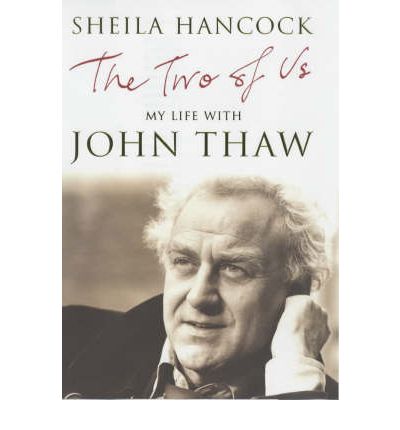
Book Review: 'The Two of Us' by Sheila Hancock


This week I've read The Two of Us. Sheila Hancock's memoir of her life with John Thaw. It was first published 15 years ago, but my love of the Inspector Morse franchise hadn't consumed me in 2004. I liked the show, just as I had liked The Sweeney when I was a teenager, but it was still just unusually intelligent tv. Television was an intellectual bete-noire for me in those days. I hated the way it was always chattering away in the background at home, forcing what I considered a mentally deadening consensual reality on its audience.

Besides,  there really was no Inspector Morse franchise in 2004. The Morse spin-off Lewis wouldn't begin for another two years, and I didn't even see that until 2010, having jettisoned my tv between house moves at some point along the line. Finally I did see it, and I thought it was wonderful, almost as good as the original (I was too loyal to allow for anything else). By the time the Morse prequel Endeavour began in 2012 I was deeply immersed in the Morse universe. Those of us who are make Star Wars fans look casual and disinterested.

The Two of Us, however, isn't about Endeavour Morse. It's not about Jack Regan either. It's about the complex, troubled man who created them both, and his twenty-eight years with Sheila Hancock, someone who all British people of a certain age will recognize even if they can't name very many things that she starred in. I remember her from her brilliant appearances on the radio show Just a Minute. More recently I have seen her in the inspirational little indie film Edie. She was in EastEnders, she writes, playing the mother of Martin Kemp, but I didn't have a tv at the time. She also appeared on tv in a number of sit-coms in the 60s and early 70s, always typecast as scatter-brained and -- from a couple of clips I've seen -- sexually flirtatious (if naively so). Her greatest work, apparently, was in the theatre.

Her book, written beautifully, looks back to their separate childhoods and the development of their careers to the point at which they met. Then we read about their lives together. Throughout, she shares extracts from her private diary, written when Thaw became ill at the start of the new century. In passages of great beauty and honest she records his slow decline and death, and the grief that paralysed her in the weeks and months that followed it. But Hancock clearly isn't the sort of woman to plead for your sympathy, or to wallow in self-pity. Slowly, painfully, with the help of friends and family, she starts to get better. Those passages, after the terrible sadness of the ones that preceded them, are joyous to read.

You probably won't want to bother with The Two of Us if you're not an admirer of either of the main players in it, and if you are, you've probably read it already. If you haven't, though, try it. And if you're a celebrity, about to hire a ghost writer to do your autobiography for you, have a look at this book first. Ghost writers rarely do a subject justice. The prose, even if it's your own speech taken from tapes and reordered, invariably comes across as flat and boring. This whole project, on the other hand, works extraordinarily well.

Sunday, March 17, 2019

Guest Writer: Ed Markowski


Homage To Thompson

On January 20, 2017 at 12:00 pm the citizens of the world bid farewell to the Obama Nation and bore witness to the dawn of America's Abomination. In New York Harbor the inscription was amended to read . . . Give me your tired your poor your huddled masses yearning to breath fear when we arrived a one-hundred and ten story hotel and casino constructed entirely of Mount Rushmore granite had erased the faces by law dictionaries phone books news papers, magazines short stories bibles encyclopedias letters coupons and conversations could no longer exceed two-hundred and eighty characters regardless of faith race denomination and purpose kneeling on Sundays became a federal crime on July 16, 2018 in honor of the president millions of men women boys and girls had their hair dyed pale orange from Moscow to Minsk his last assault on Obama's legacy was the release of a previously classified National Inquirer that proved Hillary Clinton was the mastermind responsible for the terrorist attacks on 9 / 11 / 01 on the day the documents were released Osama Bin Laden was granted a full presidential pardon by executive order Betsy DeVos was finally credited in American History books as the creator of our star mangled banner two-hundred and forty-two years after the fact all of the surviving American service men who had been taken prisoner while serving in Vietnam were convicted of impersonating war heroes and deported to Hanoi on the promise of bringing good jobs back to America his electoral college victory immediately and exponentially expanded the language employment opportunities and self esteem of dunk tank clowns at every county fair in America from Tiny Tim's preschool to Harvard white boards now stand where black boards once stood in a joint statement from the White House Rose Garden the president flanked by Franklin Graham Jerry Falwell Junior Mark Burns and Pat Robertson declared all ten commandments antiquated and obsolete on July 27 2019 the Trump International Hotel added a new restaurant Little Rocket Man's Nuclear Bar B Que the restaurant's fare is described as ravenously scant radioactive and torturously spicy the enemies of the American people were armed with ink pens typewriters pencils erasers white out notebooks paper clips sandals hope habanero peppers snow shoes Labatts Blue and the Stanley Cup from sea to shining sea the sunshine sheen coating every seal's coat was pure crude from California's Coalinga Oil Fields regardless of grain every box of organic non gmo cereal by executive order will now be labeled and sold as Corn Fakes with one exception the food feds declared every burger on the McDonald's menu a super food being that exception the Big Mac was rewarded with the title of super super food in historical museums nation wide the truth was framed and hung as children were being confiscated kidnapped and caged on the southern border the name of that time honored tradition that teaches the rewards of an honest days work and the stewardship of their wages was changed from Allowance to Hush Money after he renamed Glad Bags Vlad Bags on Thanksgiving Day 2018 during a ceremony at Plymouth Rock he told the indigenous people of the Americas they'd better damn well thank the Pilgrims for teaching them how to grow corn after his presidential commission on the state of the family found that ninety-eight percent of confiscated children including infants and toddlers thrive and are much happier living in cyclone cages without their parents he signed an executive order that changed the name of the holiday to Martin Luther Day on the following Monday his sixteen character memoir Profiles In Sewage filled America's adult book stores when the nations prison term ended in addition to the real estate holdings hotels and squeaky clean billions the ex president owned and controlled the largest flock of fanged sheep on Earth his legacy was framed by this question George Washington was America's first President, who was America's first Dicktweeter ? and through the years following his freezing reign historians political scientists and the gilded minds of Washington's think tanks used one word to describe his presidency COVFEFE . . .

                                     another stranger
                                            coming into focus . . .
                                                      family reunion


Written At The House
On Hadley Road
10/3/2018 - 10/14/2018