Thursday, February 07, 2013

25 Things You Didn't Know About Me. Possibly.


I saw somebody else do this so in a spirit of pure plagiarism, and to take my mind off Hanif Kureishi for ten minutes, I'm now going to list 25 little-known facts about me. If I can think of 25. All of these, despite my reputation for being a smart arse, are 100% true.

1. I was once made captain of my primary school football team. The other ten players promptly went on strike.

2. I wrote my first novel when I was ten, a 33 page revenge western called "Blood Lust".

3. I had a crush on my first teacher Mrs Bevan.

4. I once almost choked on bacon and had to pull it up out of my own throat to survive.

5. At primary school three girls asked to see my "winkie" and when I showed them I got in trouble.

6. I am actually very shy.

7. I once tried to learn Russian so I could read Dostoyevsky in the original. I could only ever remember the word for "fox".

8. I feel sick when I smell beetroot.

9. I once saw a ghost.

10. I have never taken any illegal drug other than marijuana, but mainly because I'm too scared and too cheap.

11. In my twenties I had a pierced ear. I let it grow out when it went crusty.

12. When I was 18 I bought a Wham! record.

13. I once had driving lessons, but I gave up when the instructor shouted at me.

14. I cry frequently. The provocation is usually music.

15. I feel there is something nightmarish about the silent tapping of computers in an I.T. room or an internet cafe.

16. I have a guitar and a flute but I can't play either.

17. I once bought weed from someone who delivered it to your door. He called his business "Deals on Wheels".

18. My greatest fear when I was younger was that I'd go bald in middle age.

19. Once I had an ear infection so bad my ear bled.

20. I first heard my favourite song "Freebird" when I was awake all night with food poisoning.

21. I am not allowed to go near the china at home because I am so clumsy I will definitely break it.

22. I have forgotten what meat tastes like.

23. I nearly drowned once in the shallow end of the swimming pool.

24. I let my neighbour in Earls Barton call me "Graham" for two years because I was too polite to correct his first mistake.

25. I don't talk about my problems because I have a horror of sounding self-indulgent. Although I am.

Dropped Kebabs and Despots: The Last Term of the Last Year Starts to Hurt


from Toothpaste For Dinner.com

I'm nearly at the end of my three years of university now. That's probably a good thing. I tried so hard to be positive about the degree, returning for year three after my summer scrape with the Grim Reaper, but by Christmas the effort had almost done more harm to my psyche than pneumonia did to my lungs.

Why not just be honest? I haven't enjoyed the third year at all. The time I've spent wasting time or getting to know certain people in the corridors and the canteen has been nice. But I wouldn't have done any of the classes, even the ones I chose, if I'd been properly informed about my choices. In fact, the ones I did go for, not really knowing how the modules would be structured, have turned out to be the biggest drag of the lot.

For my dissertation I'm writing about Salman Rushdie, Hanif Kureishi and Meera Syaal. That's fine, in a way. I chose that because the Post-Colonial module was the only one I enjoyed in the second year. But what's the point of writing analyses of other people's books, really? I mean, these in-depth structural breakdowns?

Academics make a good living picking over other people's work like ants on a dropped kebab, so for them you can see the point. But I'd rather write my own book. And when my university is dancing a naked tango with the third worst colonial despot in modern, China (I'd say the United States and Britain were number one and two), everything I write about the aftershock of Empire and our nation's perfidy in India feels rampantly hypocritical.

Whatever. I only have a few more months to do it, and then I'll be shoved out into the world again. Maybe (who knows?) with a BA after my name that will help me get a job I can stand to do when I'd much rather be writing. Then, perhaps, the last three years will all seem to have been worth it. Right now I feel more flat and uninspired mentally than I ever did back in the care work days.

Sunday, February 03, 2013

The Wizard and the Boy


I was in the queue at my local Co-Op yesterday (buying a lottery ticket, phone credit and a bar of chocolate, if anyone's interested), and in front of me were a woman and a boy. I presume he was her son. The boy was probably five, six years old. And I noticed he was staring at me, utterly transfixed, to the point where I became not only embarrassed but also angry at his mother for not reminding him of his manners.

Anyway, he'd been staring at me "for what seemed like an age" (as writers say), when his mother did the worst thing she could possibly have done. She left the boy there to go and fetch something she'd forgotten from the other end of the shop.

The boy continued staring. I wanted to knock him down. But since I couldn't do that, I stared back. This went on for several moments and then the boy relented, curling his lips back over his missing teeth in a nervous smile. Just then his mother returned.

"Hello," said the boy.

"All right mate?" I said.

The boy thought about this for a while. "What's your name?" he asked, a little tangentially I thought.

I was even more embarrassed now. Here I was, a complete stranger, having a conversation with an infant boy in a line in the Co-Op.

"My name's Bruce," I said. "What's yours?"

Again the boy gave the question some thought. Then he turned away from me without speaking. His mother shoved him in the back.

"The man arksed you a question," she said.

"What did you say?" the boy arksed me.

"I said, 'What's your name?'" I reminded him.

Another pause for consideration. He was a reflective boy. "Tyrrell," he said.

The shop assistant shouted, "Next please!" then and they moved away from me to make their purchases. I noticed Tyrrell immediately falling into a conversation with a tall young man at the next register. He told his mum that the man had bought gum and could he have some.

"No you can't!" said his mum. And groceries bought and packed, she hustled him out of the shop.

I've always been jealous of other people's ability to talk to kids. It requires a lack of self-consciousness to be able to relate to someone of Tyrrell's age, and I don't have it. When he was staring at me, I felt exactly as I would have done if I'd been five myself and he, the tough boy in my class at school. That's why I wanted to make him cry.

When I think about it for a moment, though, what must I have looked like to him? A five year old has no sense of time. There are grown-ups, which are his parents and people like them, and there are old people. To Tyrrell I was old, and not only old, but probably strange too. Had he come across men with long hair before? and thick white beards?

I bet he thought I was a wizard from one of the dvds he got to watch on Sunday mornings when his mum had headaches.

Old possessor of the magic arts, queueing in the Co-Op with a big Dairy Milk and a lottery ticket.

Tuesday, January 29, 2013

The Elephant Man: Joseph Merrick Gets a Lynching


I saw David Lynch’s ‘The Elephant Man’ for the first (and I would imagine the last) time the other day. I was more interested in watching Clint Eastwood and Burt Reynolds movies when it was released in 1980, being a late developer culturally in some ways, but I thought, at 48, that I was ready. Friends had told me it was terribly sad. Harrowing even. They said that the suffering of the famously disfigured John Merrick was almost unbearable to witness. Hmmm.

Call me a callous old bastard if you like but I didn’t find it that at all. It might have been, and I’m sure it was for the real man the movie was based on (who was actually called Joseph Merrick), but Lynch and John Hurt laid on the pathos of the Elephant Man’s existence with a giant trowel. He was so completely pitiful in his vulnerability I expected a syrupy children’s movie chorus from lamby glove puppets after every beating he took and every disappointment he sustained.

I would have liked to see how Merrick’s suffering had twisted him. It doesn’t matter whether the contemporaneous accounts they used when writing the screenplay gave any indication of this. Those accounts were written according to the conventions of their time just like anything else is, and the people who met Merrick ‘saw’ him with an agenda of their own. Being harshly treated makes people cruel and angry. I would bet money that once doctors and nurses, and then society folk, began to be kind to Merrick he responded with occasional bursts of temper and spitefulness.

 The real Joseph Merrick. Photographer Unknown. 

The movie has, of course, dated. Merrick’s make-up would have been more convincing if the film had been made in the last ten years; and Lynch’s Victorian-barkers-and-midgets-in-top-hats kind of surrealism, though undoubtedly a filmic surprise 33 years ago, when realism was more commonly used by directors, just looks transparent and precious now. It's something we’ve all seen before. The language of alternative cinema has been absorbed into the mainstream since the 80s. It’s routinely regurgitated nowadays in the form of music videos that flash by unwatched on tv while we’re talking to our friends.

So anyway, that’s one unanswered question from my youth finally answered. Is ‘The Elephant Man’ any good? For a slow afternoon when you have nothing better to do, yes; but don’t expect the grand emotion of an opera. I wonder if I should answer the other great question hanging over from those long-gone days and watch ‘Star Wars’. See what all the fuss was about there.

I think not. At the last reading Alan Moore gave, the great bearded one said 'Star Wars' was when SF started going downhill. I'll just take Alan's word for it and save myself the time, the money and the inevitable dribbling, remote-control-dropping, two hour nap that the movie would almost certainly cost me.

Thursday, January 24, 2013

Judy, Waylon and Me


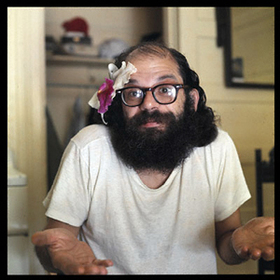
                                                       photo by Gerald Zoerner

I have spent most of the day at the university, tackling a horrendous assignment. It's an "explication" (which is a horrendous word) of an essay about gender by Judith Butler, the American post-structuralist philosopher. I don't get on with philosophy at all and I've been bashing my brains against Judy's (undoubtedly) brilliant wanderings for a week at least. I've also been trying to work out what the hell "explicating" an essay on someone's theories about gender has got to do with English literature. I know I'm studying women's writing this year, but we didn't have an essay about Karl Marx to do before we studied Dickens.

I had more fun this morning playing Waylon Jennings' Greatest Hits CD before I came out. Not the famous leather-look, gold-leaf-lettered one from the Seventies (although I bought that on vinyl when it was released and still have it in my spare room), but the one that RCA released many years later with about ten more tracks on it. I put it on as I was having my bath and engaging in the intense personal grooming I undertake before I come out every day. Waylon was glorious back then and still is, in my mind. A real philosopher king. He hunkers in there like Hunter S. Thompson, as an ideal; an ideal of self-realization and personal freedom that encourages me to be myself without apology (not that I can help it anymore). When I listened to him sing "Don't Y'All Think This Outlaw Bit's Done Got Out Of Hand" this morning, it didn't matter that I was going to the university to spend the whole day sitting at a computer boring myself shitless. Temporarily I could have been ten feet tall.


Saturday, January 19, 2013

Happy Birthday Janis Joplin


Today is the birthday of Janis Joplin, my mother's favourite singer (and one of mine). It's pointless saying how old she would have been because she isn't. And we don't need to crank any more tragedy out of her early death. Let's remember her life instead.

There were a lot of incredible artists in the second half of the Sixties, but none could wrench the passion out of a song like Janis. I'm not sure if she meant a word of what she was saying. Maybe she was just punching the clock like the rest of us do. But whenever the band wound up that fierce electric blues Janis made the words sound as if they were pouring out of her heart.


Maybe that's where the perception of her as a tragic figure rather than a dynamic one comes from, I don't know. Nobody sees Jimi Hendrix, my mother's other great hero, as a tragic figure, although he died at 27 just like Janis. But when Jimi was on stage he didn't sing the blues, not in the same way. Most of his stuff wasn't about feeling. It was about the virtuoso from the other side of space destroying evil armies with his wild sonic bombs. Something like that anyway.


Mum had a cassette version of the album Cheap Thrills and we used to sit in the kitchen together listening to it, loud, as we drank red wine. Sometimes we smoked her weed to make the sounds blasting out of her cassette radio even better. I was well into my twenties by then, if there are any moralists out there worried about youth being corrupted.

We shall not see her like again, to paraphrase some poet or other. And when I say that I mean my mother, and Janis. They are associated forever in my mind because of those nights we shared listening to the music. Two delicate - and difficult - souls, gone over to wherever the smoking, drinking souls go.

Don't worry, Mum, no crazy straight girl there is going to flush your marijuana down the loo.


Thursday, January 17, 2013

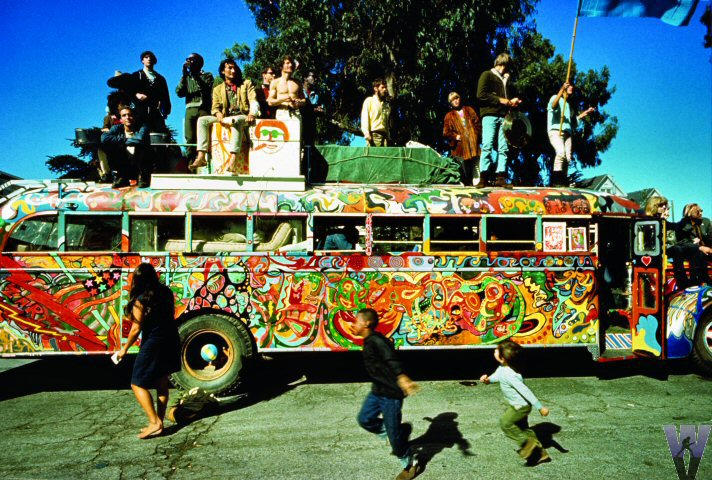
THE MAGIC BUS: KESEY, BABBS, ET AL(LEN)


I’m re-reading Tom Wolfe’s The Electric Kool-Aid Acid Test at the moment, and absolutely loving it. I should be putting all my concentration into the degree I’m doing but I’ve tried that. It made me feel psychotic.

Wolfe’s book is from 1968. My time, or at least the time my heart belongs to (I was only 6 years old when the 60s ended). It’s the story of Ken Kesey and the Merry Pranksters, that famous band of day-glo loonies who turned the world onto LSD.


Ken Babbs, who I published in my poetry magazine Blue Fred’s Kitchen, is in it, gloriously so. Allen Ginsberg, my ultimate hero, is in it. Hunter Thompson is in it. Jerry Garcia and the Grateful Dead are in it. Neal Cassady famously drives the Pranksters’ psychedelic bus Furthur. Even Kerouac makes a guest appearance at a party in New York early in the book.

These people have been companions and totems of mine for years. When I read about them it’s like someone telling me that all of the most dynamic and interesting men in the world have rolled into town at the same time. Everything becomes suffused with magic.


It might sound like I’m indulging myself, taking a break from “reality” by re-immersing myself (as if I ever dried off) in all my heroes. But I’m not. Actually I’m reminding myself what reality is when it’s not limited by fear or lack of imagination.

As Kesey himself said (I’m paraphrasing), everybody should be free to be as large as he feels he has it in him to be. Those are powerful words, and a heck of a challenge, not only to society but also to the people within it.

Have I become as large as I feel I have it in me to be? I haven’t even come close. But reading Acid Test reminds me how much I want to keep trying, and how much fun I’ll have in the attempt, even if I’m still nine-tenths unfulfilled potential when they wrap me in my winding sheet.


Better that than living someone else’s dream.


Alina's Imagination

Readers might want to know about an interesting blog I've found. It's called Alina's Imagination and it has some really nice, clear, clever, perceptive writing in it. http://alinasimagination.blogspot.co.uk/

Monday, December 31, 2012

The Kindness of Strangers (& Friends)

On the last day of 2012 all I can say is PHEW, THANK GOD I MADE IT. Well, I have as of 10.58 in the morning. I hate to sound like Eeyore or Neil from 'The Young Ones' but I don't take anything for granted anymore.

It looked dark there for a while, especially on that day in early summer when I was rolling around on my bed in the worst pain I've ever experienced, unable to breathe and simultaneously feeling like I'd been shot in the guts with an assault rifle. But I got through, thanks in no small part to the insistence of my partner Michelle that I go to hospital when she came home from work that night and found me walking all bent over, sweating like a man wearing a camel hair onesie in canopy jungle. And my hospital adventure would have been a hell of a lot harder without regular visits from Geoff and Jackie Lovesy, and Ian and Wendy Askew. They brought me food, they listened to my drug-induced ramblings, and they helped Michelle get back and forth to see me when I was transferred to Leicester. I'll never forget how grateful I am that they gave of their time and their energy like that.

The year was strange even before I fell ill, given my exhausting and impotent battle with the university over their relationship with the Chinese Communists, and the fact that I had had the first seizure in over a year - brought on, I think, by a previously undetected (because I hadn't done it until then) inability to stare at the tiny screen of my cheap flip top phone for too long without making my brain go haywire. I did the same thing, stupidly, the day before my birthday and went down in the street in Semilong, just around the corner from my house. Woke up being ministered to by a nurse who happened to be passing.

That latter detail shows the good luck I have had, in amongst the discouraging little tangles with ill health and death. Why a nurse, of all people? And what would have happened if my partner had been away for the weekend that day when it was really bad? My lung had collapsed. The nurses in Leicester told me that if I'd left it much longer I would have been heading for the worm farm.

I'm not one to look for explanations in fate, or divine protection. I don't deserve to be looked after by anyone; I'm just another guy who's trying to be a decent man and leave the world better than he found it. Luck will do, as an answer to why I'm still here plaguing my few remaining friends and readers with my pontificating and my bad poetry. I can deal with the possibility that life or death are decided by whether you choose to turn right or left at the end of the next road. It's frightening, but it gives life a glorious clarity.

I can also deal with the possibility that there's more than a little kindness in most people, and that sometimes our lives just get in the way of us showing it.

Which is a useful thought to hold onto on the day that the Office for National Statistics publishes data showing that the wealth gap between the country’s rich and poor is twice as wide as any EU member state. I get very depressed about such things sometimes, wondering if we'll ever have the fair and generous Britain that I long for. But when my own experience with other people shows me, generally, exceptional kindness, how can I give up hope?

Thursday, December 13, 2012

A Step Away From Them

                                         First
Bunny died, then John Latouche,
then Jackson Pollack. But is the
earth as full as life was full, of them?*


RAVI SHANKAR, virtuouso sitar player, whose death aged 92 was announced yesterday. He is pictured here many years ago with his student and friend George Harrison. How bare the world sometimes seems when great men and women leave it.

Incidentally, can we stop, for a moment, referring to Ravi as the father of (S)Norah Jones? I think his achievements were significant enough to be considered in their own right.

*Frank O'Hara "A Step Away From Them".

Thursday, November 29, 2012

You're Danger-What? Dangermouse, Did You Say?

These musings have not appeared in a scholarly journal and they have not been peer reviewed.

I keep hearing that people are dangerous when they're educated. Despite the fact that I am now, nearly, educated, I have to say something about this apparently widespread belief before steam comes out of my ears.

It's bollocks. And more to the point, it's snobby, class-ist bollocks, since even before the massive hike in student loans the number of students at university who'd come straight off the estates seemed pretty damn small. Now it will probably be smaller than the number of university bureaucrats who gave a shit when I talked to them about their relationship with China.

Every office of every politician in the land is filled with educated people; and not one of them is doing anything to change the world for the better. All they're doing is helping to keep a cruel, cancerous system running that benefits them and screws over the poor, the weak, the sick and the disabled.

You have to be educated to work in most businesses if you're not going to wear overalls or an ugly uniform with a name tag on it. And your only purpose in business is to make money to buy a nice house and keep the boss warm in his swimming pool, unless you're part of something that's producing really innovative technology that helps humanity in some way. The number of companies doing that in Britain these days must be very small indeed

You have to be educated to work in book publishing too, in the mainstream. And no one in the mainstream has published anything dangerous for years.

I have enjoyed my time at university, although I must admit it's mostly been fun because of the people I've met. But it has struck me over and over again that this education I was receiving was teaching me (unsuccessfully) how to say what they wanted me to say in the style that they wanted me to say it. University to me seems like a fancy intellectual cookie cutter designed to turn out thousands of people every year who are the same mental shape.

Perhaps - and I don't really think it's so - but perhaps a person who was dangerous already is more dangerous with an education. But what really threatens power and corruption is intellectual independence and a well-developed personal conscience, and you can find that just as frequently, if not more often actually, behind cash registers, in care home car parks on cigarette breaks, and outside on the wall at the Job Centre.

Saying that the educated are dangerous implies that the uneducated are easily duped by political parties with bad intentions. Sometimes that's so; sometimes it isn't. But who voted for David Cameron? Who, perhaps more germainely, couldn't see what a complete bullshitter Nick Clegg was and voted for the Liberal Democrats, who are supporting some of the most iniquitous policies carried out against the vulnerable in this country for 100 years? And who keeps re-electing their puppets in the local councils?

It certainly wasn't anyone from round my way.

Saturday, November 24, 2012

Cooking the Books, or How We Stopped Mithering and Jumped Up the League Table

As followers of this blog will know, I have been at university since 2010. I'm doing a degree in English. I didn't plan on doing one, but at the beginning of that year I walked out on my job, burned out after 15 years and pissed off with the persecution I was receiving from my manager because I didn't know how to kiss ass like some of the others. I had to do something or keep signing on indefinitely, there being very few jobs around at the time for 44 year old epileptics with left wing sympathies, a bad disciplinary record and no reference. So I chose university. It wasn't signing on or a job, after all; I got money for it too.

I'm coming to the end of my degree soon. I have six or seven months to put in and then I can retire from Academia. But before I leave I'm obliged, apparently, to fill in something called the National Student Survey. It's a nationwide customer satisfaction survey of higher education which (I think) somebody or other consults when drawing up the university league tables for the following year. "You must do this," two lecturers told us, while giving separate presentations on the subject. "If you don't we will call you at home and write you letters."

Which is fair enough. It isn't too hard to fob off lecturers, ignore phone calls and tear up letters. But telling us, as they did, that it is in our interest to portray the university in a positive light in the survey isn't fair enough.When I heard this I almost choked; although nobody else in either room where I heard it seemed to mind one way or the other. The argument of the two English professors who made this outrageous statement was that if we made the uni look good, our degree would be more respectable and we would all get better jobs. So, blackmailing impressionable people is acceptable now in the sterling-driven world of education?

The real reason these men want us to gloss over the problems at my university is so that we can bump it out of the relegation zone in the academic league table; and probably give their careers more weight so that they'll make it onto the shortlist the next time they apply for a job somewhere. And the irony is, there's nothing much wrong with the English Department, although for me there weren't enough options and the syllabus was much too narrow. The lecturers themselves are pretty damn good (with one obvious poetasting exception).

But there are problems; big problems. And if we don't bring them to the attention of the people who can do something about it, kids coming in paying twice as much as we did (and then some) for the same education are going to have to deal with the same things, and by then the problems will have become more entrenched.

Why didn't I raise any of the issues I obviously have internally, you might ask. I did. With person after person, at level after level. I used the complaints procedure. I even used the internal student questionnaire. And you know what? I didn't get a single answer, from anyone, all year. The only time I've ever even seen the Vice Chancellor, who I wrote to more than once about the university's close relationship with China, is when he's escorting business people around the building telling them what a fabulous student experience they provide.

The mantra at my university is, "Keep your mouth shut and get a good degree." I was advised to do that in the first year by an American Literature professor (I couldn't) and I've heard it since from student after student. What an appalling legacy to hand down to the next generation of consumers. Or maybe it's a good one and I've got the wrong end of the stick completely. I come from another time, after all; I was raised by a person who believed that you should stand up to power and live for more than two holidays a year and that next big promotion.

Tuesday, November 20, 2012

Stage Fright

Tomorrow night there's another open mic at the newly-branded "Legendary Labour Club" in Northampton. The primarily spoken word Raising the Awen event. I've been there to read for the last two months but after the debacle of my brief slot in October, when I suffered some sort of psychological meltdown, I won't be attending this time. I'm going to my friend's house for the evening instead. Maybe dying my long grey hair purple at the roots.

Performance poetry is an art, and a very different one from writing poetry down. In the best poets the two arts cross over (Allen Ginsberg, Ron Whitehead, Jimtom Keith Thomas James). Some who write imperfect poetry can convince you they are wonderful because of the strength of their personality when they stand at the mic. That doesn't apply to me. I don't have the personality for standing up in front of a crowd and making them like me, or engage with anything I'm saying that's controversial or difficult. I don't want people to like me. I'm too afraid of them for that. I hate them too much for that. I don't want them to listen to me either because I know I'm full of shit. I just want my art to be a metaphorical sword that cuts off their heads and uses them for jack o'lanterns. I just want them to give me all their money and leave me the fuck alone. I want to bring the grave into the club without paying extra for the drinks.

People tell me to keep doing it until the confidence comes. There's probably some wisdom in that too. You can learn to do most things if you keep going at it for long enough. But why put myself through the pain when there's nothing to be gained from it? The last time I stood up there I felt like I'd been flayed alive. I sat in the darkness after my slot was finished hating myself for not making an impact and wishing fire and pestilence on everything and everyone around me (not fair maybe, but true). It didn't help that someone who was trying to be helpful stood at the mic and made a joke about the uncontrollable trembling of my hands. They shake like that because of the medication I'm on; and when I'm nervous they shake more. It makes me feel like a freak and I try to hide it - something you can't do on a stage with 20 or 30 people watching. When he joked about it an embarrassed man became a humiliated and angry man. If I could have exited from the club at that moment without making even more of a spectacle of myself I would have done it.

As it was I stayed until the end, behaving in a curiously apologetic, self-justifying manner as I slunk out of the door and into the night. When I woke up in the morning and thought about my catastrophic performance and obsequious behaviour at closing time, I didn't think I'd ever go out of the house again.

Well, I've done that. I'm here in the university now writing this. But when I'll be returning to the spoken word mic is another thing entirely. Certainly it won't be any time soon, not that I want anyone to think this is a problem for me.